
You want to keep your child out of the dental chair for major problems later. You want your own teeth to stay healthy as the years go by. You also want a dental office that feels steady, familiar, and personal, not rushed.
That’s exactly where preventive care matters.
If you’ve ever wondered what is preventive dental care, the simplest answer is this: it’s the care that helps stop problems before they become painful, expensive, or disruptive. It protects teeth, gums, bite function, and often much more than people realize. In a private practice setting, preventive care also becomes the place where your dentist gets to know your health over time, notices small changes early, and helps you make decisions with confidence.
For families in Wesley Chapel, FL and surrounding areas in Northern Tampa, prevention is often the most practical way to support long-term oral health. It can also support broader health goals, especially for adults dealing with snoring, poor sleep, grinding, or chronic conditions that can show up in the mouth before they show up anywhere else.
Your Partner for Lifelong Health in Wesley Chapel FL
Many families start with the same hope. They want clean checkups, fewer surprises, and a plan that makes sense for each person in the household. Parents want to know their children are growing up with healthy habits. Adults want to avoid the cycle of waiting until something hurts.
That’s the heart of preventive dentistry.
Preventive care isn’t one appointment. It’s an ongoing relationship built around regular exams, cleanings, early screenings, and clear guidance for home care. When that relationship is consistent, your dentist can track patterns, spot changes, and recommend treatment while problems are still small.
Why prevention feels different in a private practice
In a private office, care tends to be more continuous. You’re not starting over with a new team every time. Your history, concerns, and goals stay part of the conversation.
That continuity matters because dental health changes slowly in many cases. A small area of enamel wear, early gum irritation, clenching, or airway concerns may not seem urgent in one visit. Over time, those details can reveal a pattern.
Practical rule: The best dental visit is often the one where nothing serious is found because someone was paying attention early.
Families who are new to the area often tell us they’re looking for a dentist near me in Wesley Chapel, FL who can care for children, adults, and changing health needs under one roof. That search usually isn’t just about convenience. It’s about trust.
Preventive care gives you a starting point for that trust. It creates a baseline, keeps routine care on schedule, and opens the door to other conversations when needed, whether that involves family dentistry, restorative dentistry, cosmetic concerns, clear aligners, or sleep-related issues.
Defining Preventive Dental Care for Your Family
Preventive dental care means protecting the mouth before disease or damage has a chance to progress. That includes routine checkups, professional cleanings, and targeted treatments such as fluoride and sealants. It also includes the choices you make at home every day.
For most families, the easiest way to understand what is preventive dental care is to think of it as a partnership. Part of the work happens in the dental chair. The other part happens in your bathroom, your kitchen, and your daily routine.

Two parts of prevention
The first part is professional care. That includes exams to look for early changes, cleanings to remove buildup you can’t remove at home, and preventive treatments based on your risk.
The second part is home care. Brushing, flossing, food choices, hydration, and keeping regular appointments all affect whether small problems stay small.
People sometimes assume preventive care is only for children. It isn’t. Children need it because teeth are developing and habits are forming. Adults need it because gum health, wear, restorations, airway issues, and systemic health concerns can all change with time.
Why this matters in Florida
For families here, there’s a local reason to take prevention seriously. In Florida, 71.9% of children receive preventive dental care, compared with the national average of 80.2%, according to America’s Health Rankings on preventive dental care. That means many children are missing the routine care that helps catch issues early.
When a state falls behind on prevention, families often feel the effect later through more cavities, more urgent visits, and more uncertainty about what could have been avoided. A consistent local dental home can help close that gap.
Insurance questions can also create confusion, especially for new families trying to plan care wisely. If you’re reviewing benefits before booking, Pounds Health Insurance on preventive coverage offers a helpful overview of how preventive services are commonly approached in health coverage discussions.
Preventive dental care works best when it’s boring in the best possible way. Regular, predictable, and built into family life.
Key Preventive Dentistry Services We Offer
It's common to hear “preventive dentistry” and immediately think “cleaning.” Cleanings matter, but they’re only one part of a much bigger system.
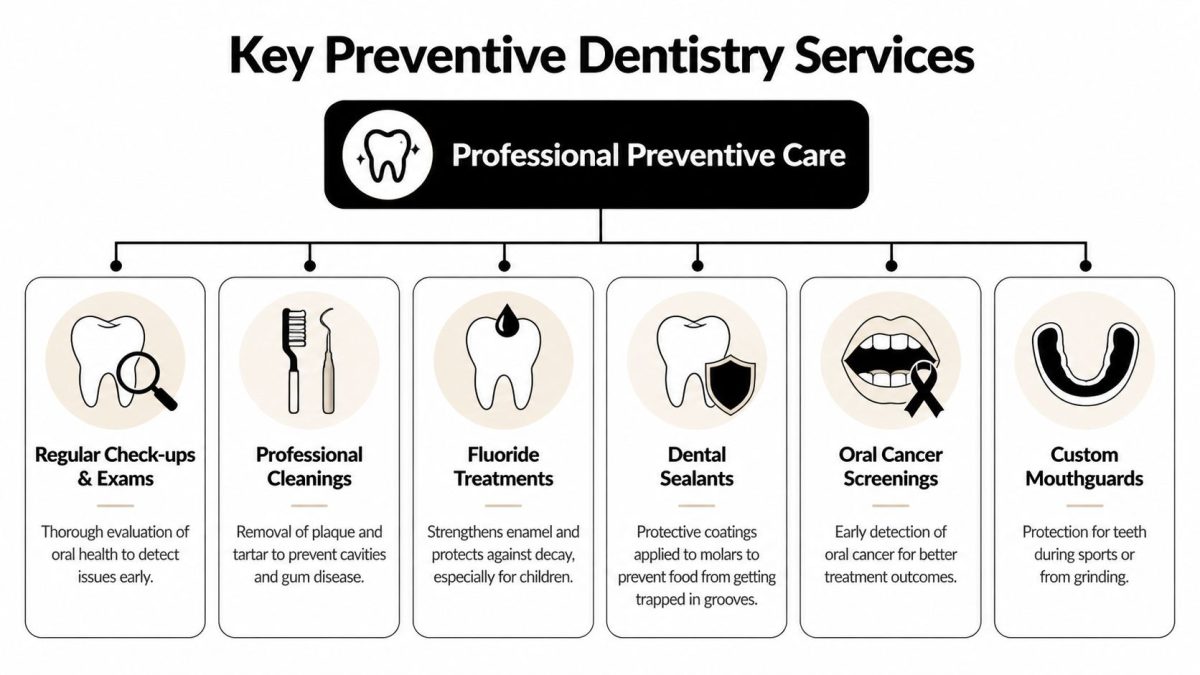
Professional preventive care is really a set of tools that work together. One helps us see problems. Another lowers your risk. Another protects teeth that are hard to clean well at home.
Exams and cleanings
A thorough exam gives your dentist a full picture of your oral health. We check teeth, gums, existing dental work, bite patterns, and signs of wear or inflammation. Such exams facilitate early detection.
Professional cleanings remove plaque and tartar from places your toothbrush can’t fully manage. Even patients with solid brushing habits can develop buildup along the gumline or around back teeth. Removing that buildup lowers the chance that irritation turns into gum disease.
Digital imaging and screenings
Some issues hide below the surface. That’s where digital X-rays and other diagnostic tools help. They can reveal changes that aren’t visible during a visual exam alone, which is one reason preventive visits are so valuable even when nothing hurts.
Oral cancer screenings are another important part of prevention. They’re quick, comfortable, and focused on catching concerning changes early.
Patients also care about safety and cleanliness, and they should. If you’re curious about how practices think through infection control and daily operations, this overview of sanitation best practices for clinic owners gives useful background on the standards that shape a well-run clinical environment.
Fluoride and sealants
Fluoride helps strengthen enamel and makes teeth more resistant to decay. It’s often recommended for children, but some adults benefit too, especially if they have higher cavity risk, dry mouth, or a history of breakdown around restorations.
Sealants are one of the clearest examples of prevention doing exactly what it’s supposed to do. They’re thin protective coatings placed on the chewing surfaces of molars, where grooves can trap food and bacteria. Think of them like raincoats for vulnerable back teeth.
According to Delta Dental Institute research on preventive dental care, dental sealants reduce the risk of cavities in molars by 80% in the first two years after application. For the right child or at-risk adult, that makes them one of the most useful preventive tools available.
If you want a closer look at who benefits and how they work, our page on dental sealants and extra protection for your teeth explains the concept in more detail.
Protection for grinding and sports
Not every preventive service is about cavities. Some are about preventing damage.
Custom mouthguards can protect teeth during sports. Nightguards can help reduce wear from grinding or clenching. These appliances don’t solve every underlying cause, but they can prevent fractures, flattening, soreness, and strain while we evaluate the bigger picture.
- Checkups and exams help find small issues before they become major ones.
- Cleanings remove hardened buildup that home care leaves behind.
- Digital imaging helps detect hidden concerns.
- Fluoride and sealants strengthen or shield teeth with added protection.
- Oral cancer screenings and protective appliances help prevent more serious harm from going unnoticed.
Your Role in Preventive Care Between Visits
The dental office can do a lot, but your daily routine does most of the long-term work.
That’s good news because the basics are simple and manageable when they’re done consistently. You don’t need a complicated routine. You need one you can follow.
The home habits that matter most
Brush thoroughly, not quickly. A full two minutes gives you time to reach the gumline, back molars, and the areas people miss when they rush.
Flossing matters because your toothbrush can’t clean between teeth. If traditional floss feels awkward, floss picks or other dentist-recommended tools may make the habit easier to keep.
Food choices also shape oral health. Frequent sugary snacks and drinks feed the bacteria that cause decay. Water, balanced meals, and fewer constant sips of sweet beverages make a real difference over time.
Try to think in terms of frequency, not perfection. Teeth do better with steady care than occasional “reset” days after a week of neglect.
A simple guide for visit timing
The exact timing of preventive visits can vary based on age, cavity risk, gum health, restorations, and medical history. A practical guide looks like this:
| Age Group | Recommended Visit Frequency |
|---|---|
| Infants and toddlers | First dental visit by age one, or when the first tooth appears |
| Children and teens | Regular preventive visits, often every six months unless risk factors call for closer follow-up |
| Adults | Regular preventive visits, commonly every six months, with changes if gum disease, wear, or other concerns are present |
| Older adults | Regular preventive visits, with schedule adjusted if dry mouth, medical conditions, or more complex dental needs are involved |
When your routine may need extra support
Some people need more than a standard schedule. You may need closer monitoring if you:
- Get cavities often and need more help lowering risk
- Have bleeding gums or signs of periodontal problems
- Wear braces, aligners, bridges, or implants that create extra cleaning challenges
- Clench, grind, or wake with jaw tension that can wear teeth down
- Take medications that dry the mouth and increase decay risk
Prevention works best when home care and professional care support each other. One can’t fully replace the other.
The Connection Between Oral Health and Overall Wellness
Your mouth isn’t separate from the rest of your body. It’s part of how you eat, breathe, sleep, speak, and manage inflammation. That’s why preventive dentistry should never be treated as cosmetic maintenance alone.

When gum tissue stays inflamed or the mouth isn’t functioning well, dentists often see signs that point beyond teeth. A preventive exam can reveal clenching, dry mouth, irritated tissues, uneven wear, recession, or bite changes that deserve a closer look. Those findings matter because they can connect to sleep quality, stress, medical conditions, and daily habits.
Why adults should think beyond cavities
Adults sometimes postpone dental visits because they assume prevention is mainly for kids. In reality, adult preventive care is often where larger health patterns first come into focus.
Recent guidance from Cigna on preventive dentistry and chronic condition support notes that thorough preventive care does more than prevent cavities. It’s linked to fewer costly, nonpreventive procedures for adults and can help dentists identify early signs of systemic issues such as sleep-disordered breathing during routine exams.
That point is especially important for people who snore, grind their teeth, wake tired, or notice jaw soreness. In some cases, the first clues of a breathing-related sleep issue show up in the mouth long before a patient connects them to sleep.
Preventive visits can open a bigger health conversation
A routine exam may include questions about sleep quality, headaches, grinding, dry mouth, and daytime fatigue. Those aren’t side topics. They’re part of understanding how the mouth is functioning in real life.
That’s one reason many adults find value in reading more about the benefits of regular dental visits beyond oral health. The goal isn’t to turn every cleaning into a medical workup. It’s to recognize that early signs often appear in ordinary appointments.
Here’s a helpful visual overview related to that bigger picture:
What this means for total-body wellness
Preventive dental care supports total health in a practical way:
- It lowers the chance that small oral problems become major treatment needs
- It helps identify patterns such as grinding, inflammation, or airway concerns
- It creates continuity so changes are easier to recognize over time
- It gives patients a place to ask broader questions about function, comfort, and health habits
At Seven Oaks Dentistry and Sleep Medicine, that whole-health view can include preventive exams alongside restorative, cosmetic, orthodontic, and sleep-related discussions when appropriate.
A healthy smile isn’t just about appearance. It’s also about comfort, function, rest, and the ability to catch warning signs early.
What to Expect at Your Preventive Visit in Wesley Chapel
A preventive appointment should feel calm, organized, and personal. You shouldn’t feel like you’re being moved through a system. You should feel like someone is paying attention.
When you arrive, the first goal is to understand where you are now. That includes your dental history, current concerns, past treatment experiences, and any changes in your health. For some patients, the big concern is sensitivity. For others, it’s bleeding gums, worn teeth, cosmetic questions, or trouble sleeping.
A visit that starts with listening
Your appointment typically begins with a conversation. If you’ve had stressful dental visits before, that matters. If you’re wondering whether your child needs sealants, whether clear aligners make sense for a teen, or whether jaw clenching is becoming a problem, those questions belong in the room from the start.
A private office setting makes that easier. With 57 million Americans living in dental health professional shortage areas, access to consistent care can be difficult, as the CDC overview of oral health equity and access barriers notes. A stable local practice helps families avoid getting lost in an overburdened system.

What happens during the appointment
Most preventive visits include several parts:
- Review of your health and concerns so care is matched to your situation
- A thorough exam to check teeth, gums, restorations, and visible signs of wear or inflammation
- Professional cleaning if appropriate for your needs that day
- Discussion of findings and next steps in plain language
- Personalized recommendations for home care, follow-up timing, or additional services
If something outside basic prevention comes up, that doesn’t mean pressure. It means information. A thorough visit may naturally lead to a conversation about restorative dentistry, cosmetic dentistry, veneers, Invisalign, clear aligners, or sleep-related evaluation if those issues are relevant to your goals.
What patients usually appreciate most
Patients often tell us the biggest relief is knowing what’s happening and why. Clear explanations lower anxiety. So does having time to ask questions about insurance, treatment priorities, and what can wait versus what shouldn’t.
That’s one of the key strengths of an experienced private practice. The visit isn’t only about cleaning teeth. It’s about helping you leave with a plan that feels understandable and manageable.
Partnering for a Lifetime of Health at Seven Oaks Dentistry
Preventive care is one of the smartest investments you can make in your family’s health. It protects more than teeth. It supports comfort, confidence, function, and the kind of early awareness that can change the course of future treatment.
It also works best when it becomes routine. After the disruption of the pandemic, preventive dental visits for insured Americans had rebounded to pre-pandemic levels by 2023, according to Delta Dental’s updated research on preventive visit recovery. That reflects a broader return to proactive health habits, and it’s a good reminder that prevention still matters significantly to patients and families.
If you’ve been putting off a visit, wondering whether your child is due, or looking for a long-term dental home in Wesley Chapel, FL and surrounding Northern Tampa communities, prevention is the right place to begin. A steady relationship, thoughtful exams, and clear education can make future care simpler and less stressful.
If you’re ready to take the next step, schedule a visit with Seven Oaks Dentistry and Sleep Medicine. For families and adults in Wesley Chapel, FL and nearby Northern Tampa communities, preventive care can be the start of a healthier smile, better daily comfort, and a more confident plan for long-term wellness.
 Read Our Reviews

 October, 2026

