
Waking up with a sore jaw when you’ve been using a device meant to prevent pain is beyond frustrating. It’s a classic “the cure is worse than the disease” scenario. More often than not, the primary cause of jaw pain from a mouth guard is an improper fit. It forces your jaw into an unnatural, strained position all night long, leading to muscle fatigue and joint pressure by morning. At Seven Oaks Dentistry & Sleep Medicine, we see this often in our Wesley Chapel community and want you to know there are clear solutions.
But fit isn’t the only potential culprit. The material could be too hard, or the guard might be making an underlying issue—like a TMJ disorder—even worse. Understanding why this happens is the first step toward finding lasting relief and connecting your oral care to your overall well-being.
Why Your Mouth Guard Might Be Causing Jaw Pain
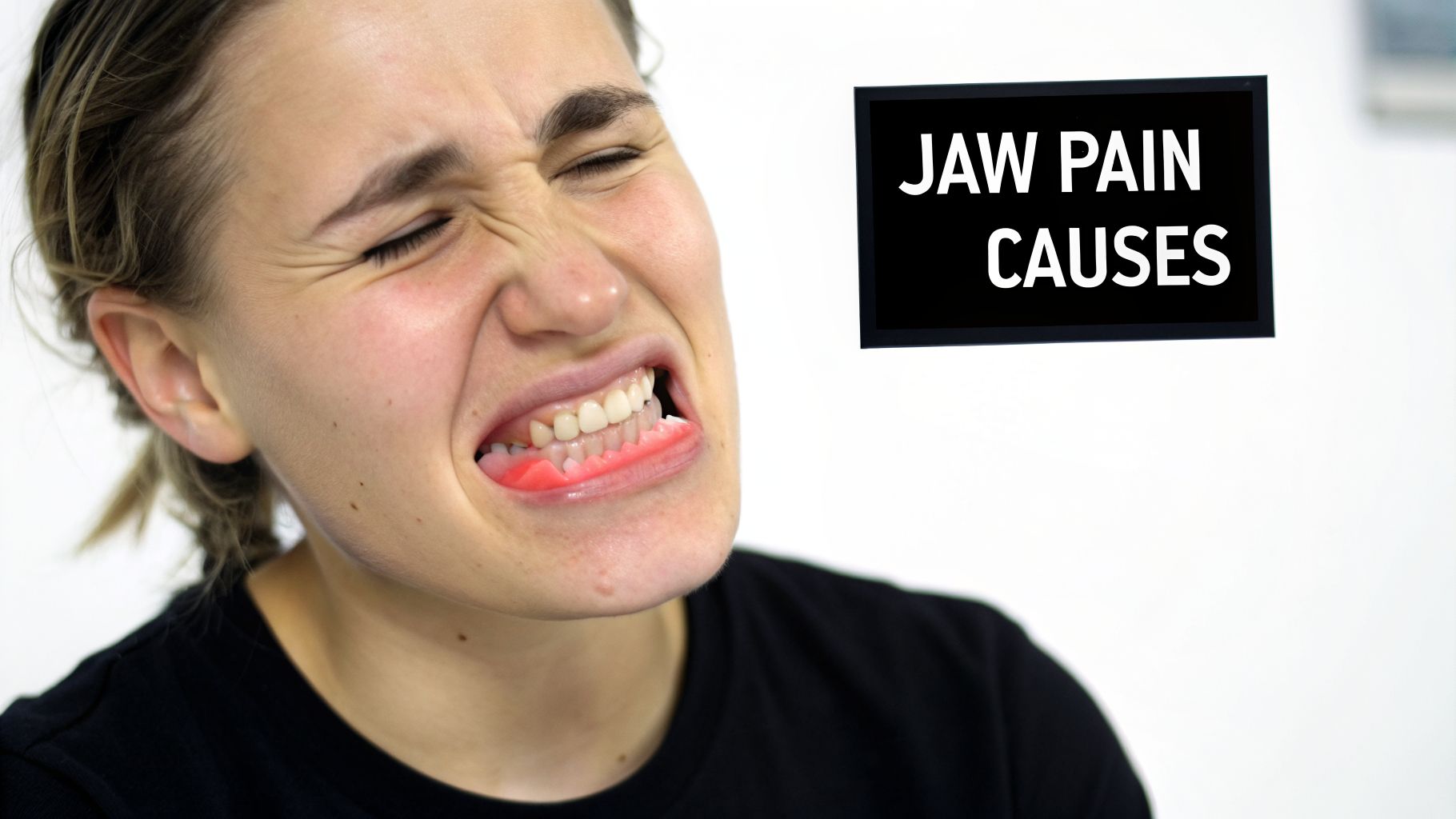
A mouth guard is supposed to be a tool for protection and relief, not a new source of discomfort. If you’re experiencing jaw pain, that’s your body sending a clear signal that something isn’t right. At Seven Oaks Dentistry & Sleep Medicine, we know that mouth health is directly connected to whole-body wellness, and persistent jaw pain is a perfect example of this link. It’s a core part of our complete health philosophy.
This kind of discomfort usually boils down to a few key issues we see regularly in our Wesley Chapel, FL, practice. Understanding what could be going wrong is the first step toward feeling better.
Common Causes of Mouth Guard Discomfort
Let’s break down the most common reasons a device meant to stop pain ends up causing it instead.
- Improper Fit: This is the big one. An over-the-counter or poorly fabricated guard can shift your jaw into an awkward position while you sleep. Your muscles try to compensate, and you wake up with fatigue and joint pain.
- Incorrect Bite Alignment: A properly made guard should allow your teeth to meet evenly. If it doesn’t, it creates pressure points, forcing certain jaw muscles to work much harder than others all night.
- Aggravating an Underlying Condition: Sometimes, the guard isn’t the root cause but is instead making an undiagnosed problem, like a temporomandibular joint (TMJ) disorder, flare up. Healing through the mouth starts with a correct diagnosis.
TMJ disorders are a huge health concern, with about 1 in every 12 people in the U.S. experiencing symptoms. These conditions are far more common in women, which underscores the need for a precise diagnosis when jaw pain pops up.
To give you a clearer picture, here’s a quick summary of what might be happening and what you should do next.
Quick Guide to Mouth Guard Discomfort
| Potential Cause | What It Means for You | Your First Step |
|---|---|---|
| Poor Fit | Your jaw is being held in a strained, unnatural position all night, causing muscle aches. | Stop wearing the guard immediately and schedule a visit with your dentist. |
| Incorrect Bite | The guard is creating an uneven bite, putting focused pressure on certain teeth and muscles. | Don’t try to adjust it yourself. A dentist needs to assess and refit the appliance. |
| TMJ Aggravation | The guard might be worsening an existing but undiagnosed joint or muscle issue. | Seek a professional diagnosis to identify the root cause of your TMJ symptoms. |
This table simplifies the problem, but a real solution often requires a professional eye.
As a private practice in Wesley Chapel with over 30+ years of experience, Dr. Lee Daniels takes a comprehensive approach. He knows that issues like bruxism—the clinical term for teeth grinding—require more than just a piece of plastic. They need a solution that supports your entire jaw system.
You can learn more about the dangers of grinding your teeth in our detailed guide. The journey to real relief starts with a professional diagnosis from a local dentist you can trust.
The Problem with One-Size-Fits-All Mouth Guards
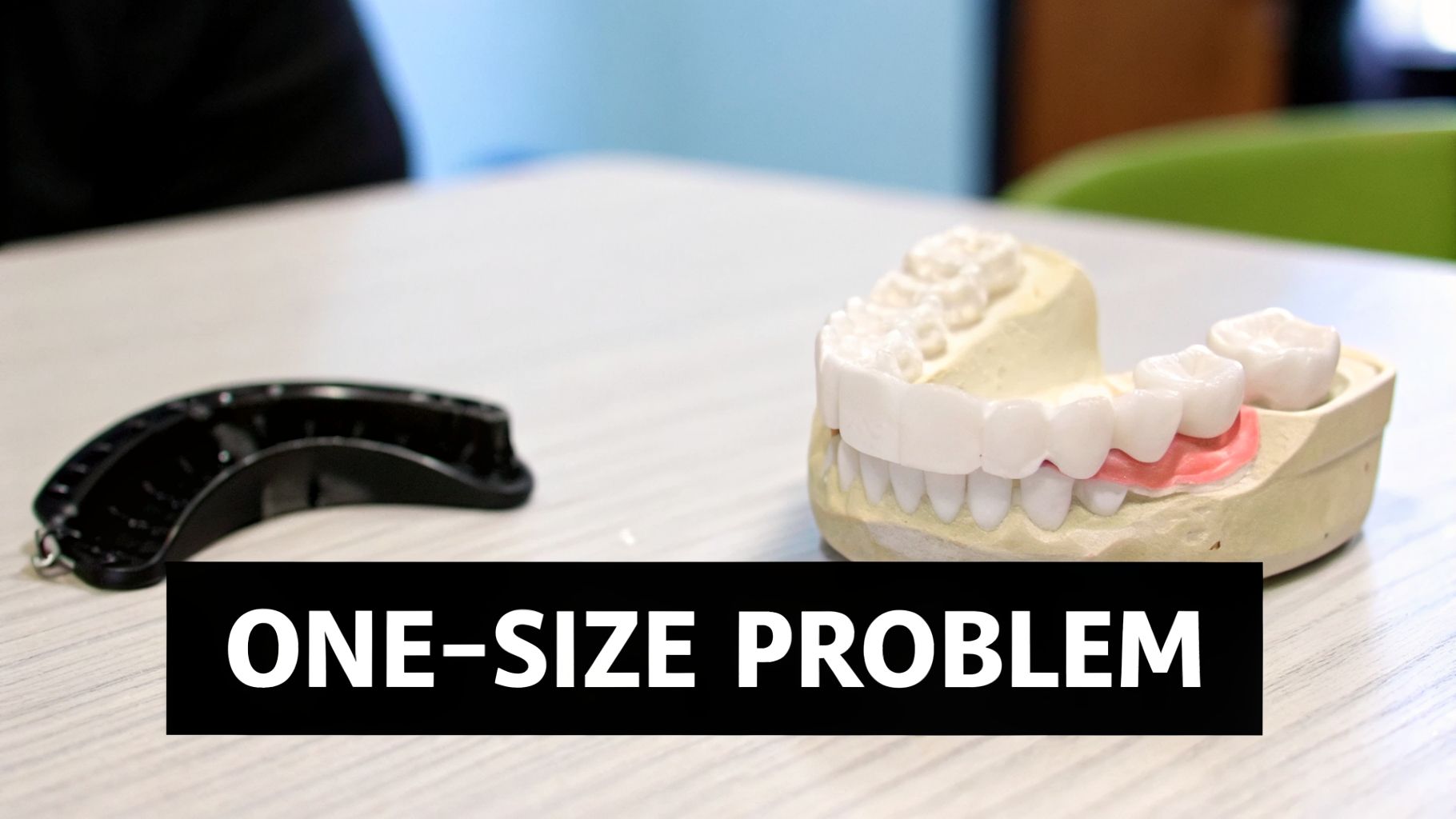
When your jaw is aching, running to the nearest drugstore for a quick fix is completely understandable. Those “boil-and-bite” mouth guards seem like an easy, affordable answer. The problem is, they often become the hidden source of the very pain they’re supposed to prevent.
Think of it this way: you wouldn’t wear a generic shoe insert to fix a complex foot problem. You’d see a specialist for a custom orthotic designed just for you. Your jaw is no different—it’s an intricate system of joints, muscles, and teeth that demands a precise solution, not a generic piece of plastic.
Why Generic Guards Often Do More Harm Than Good
A poorly fitting mouth guard is more than just bulky and uncomfortable. It can actually force your jaw into a strained, unnatural position all night long. This subtle misalignment kicks off a whole cascade of problems.
- Muscle Strain: Your jaw muscles end up working overtime trying to hold that awkward position, leading to fatigue, soreness, and those dreaded morning headaches.
- Joint Pressure: The bad fit can put uneven stress on your temporomandibular joint (TMJ). This can easily aggravate the delicate joint, potentially worsening or even causing TMJ disorders.
- Unwanted Tooth Movement: Over time, the constant, uneven pressure from an ill-fitting guard can literally push your teeth around, subtly shifting your bite and creating brand new alignment issues.
A “one-size-fits-all” approach rarely fits anyone perfectly. When it comes to your jaw, an imperfect fit translates directly into pain and dysfunction, completely undermining the goal of a healthy mouth.
The Precision-Fit Approach at Our Private Practice
At Seven Oaks Dentistry & Sleep Medicine, an independently owned practice here in Wesley Chapel, FL, we just don’t do “generic.” We know that for an oral appliance to actually work, it has to be crafted to the unique landscape of your mouth. A custom-fit guard doesn’t just shield your teeth; it supports a balanced, harmonious bite that finally lets your jaw muscles relax.
Our entire process is designed to ensure your mouth guard is part of the solution, not the cause of jaw pain from a mouth guard. We start by taking incredibly accurate digital impressions of your teeth—no more messy, goopy trays. These precise scans give Dr. Daniels, a local dentist with over 30+ years of experience, the exact blueprint he needs to design an appliance that cradles every tooth perfectly and guides your bite into its most comfortable, natural resting position.
It’s this meticulous, personalized process that ensures the final result brings relief, not more stress. A custom guard from our practice is a true therapeutic tool, designed to support your journey toward a pain-free life and better overall health.
Practical At-Home Steps for Jaw Soreness Relief
When your jaw is aching from a new mouth guard, getting some relief—and fast—is the top priority while you figure out what’s wrong. These simple at-home strategies can help manage the soreness and give your jaw muscles the break they desperately need.
First things first, give your jaw a rest. Stop wearing the mouth guard temporarily until you can get it looked at by a professional. Pushing through the pain by continuing to use a bad guard will only make the inflammation and discomfort worse, and it won’t give your muscles a chance to recover. This one step is often the most effective thing you can do right away.
Soothing Inflammation and Tension
Next, you’ll want to get that inflammation down. Grab a cold compress or an ice pack wrapped in a towel and apply it to the sore spot for 15-20 minutes at a time. This can make a huge difference in reducing swelling and numbing the pain, especially if it feels sharp and acute after a long night.
A little gentle movement can also help release that built-up tension. Try slowly opening your mouth as wide as feels comfortable, holding it for a few seconds, and then slowly closing it. You can also use your fingertips to gently massage the sore muscles around your jaw joint in small, circular motions. To really get those muscles to unclench, learning how to relax tight muscles can be a game-changer for releasing tension throughout your entire jaw and face.
Remember, these at-home remedies are intended for temporary relief. Persistent pain is your body’s way of telling you that there’s a deeper issue that needs professional attention.
Giving Your Jaw a Break
Finally, make a few temporary changes to your diet to take the stress off your jaw. For the next few days, stick to soft foods that don’t require a lot of work to eat.
- Foods to Choose: Think soups, smoothies, yogurt, mashed potatoes, and scrambled eggs.
- Foods to Avoid: Steer clear of anything crunchy like nuts and hard candies, or chewy like steak and tough bread.
This “food vacation” gives your overworked jaw muscles and joints time to heal without the added strain of heavy chewing.
While these steps can bring some much-needed comfort, they aren’t a permanent fix. If your jaw pain from the mouth guard sticks around for more than a few days, that’s a clear sign it’s time to call in a professional. Here at Seven Oaks Dentistry & Sleep Medicine, Dr. Daniels can get to the root of the problem and create a lasting solution, getting your healing journey started right here in Wesley Chapel, FL.
Recognizing the Signs to See Your Wesley Chapel Dentist
At-home remedies can offer some much-needed temporary relief, but they’re really just a band-aid—they don’t fix what’s causing the pain in the first place. So, how do you know when jaw pain is more than a minor break-in annoyance and actually requires a professional eye? Knowing the warning signs is the key to stopping a small issue from snowballing into a much bigger one.
The most obvious red flag is pain that just won’t quit. If your jaw is still sore after more than a week, especially after you’ve stopped using the guard and tried some at-home care, that’s a clear signal something isn’t right. You should never ignore pain that feels sharp, radiates toward your ear or neck, or seems to be getting worse.
Specific Symptoms That Warrant a Visit
Beyond that general, lingering soreness, certain symptoms are more specific and can point to a bigger problem, like a significant bite misalignment or an undiagnosed TMJ disorder. You’ll want to schedule a consultation with your dentist right away if you’re experiencing any of these:
- Difficulty with Jaw Movement: Are you having trouble opening or closing your mouth all the way? Does your jaw feel like it’s “locking” or getting stuck?
- Audible Joint Noises: Hearing loud clicking, popping, or grinding sounds from your jaw joint when you chew, talk, or yawn is a classic sign of trouble.
- Recurring Headaches or Earaches: Waking up with tension headaches, migraines, or a nagging ache in or around your ears is often directly linked to jaw muscle strain.
This decision tree can help you visualize when at-home care is a good first step and when it’s time to call in the professionals.
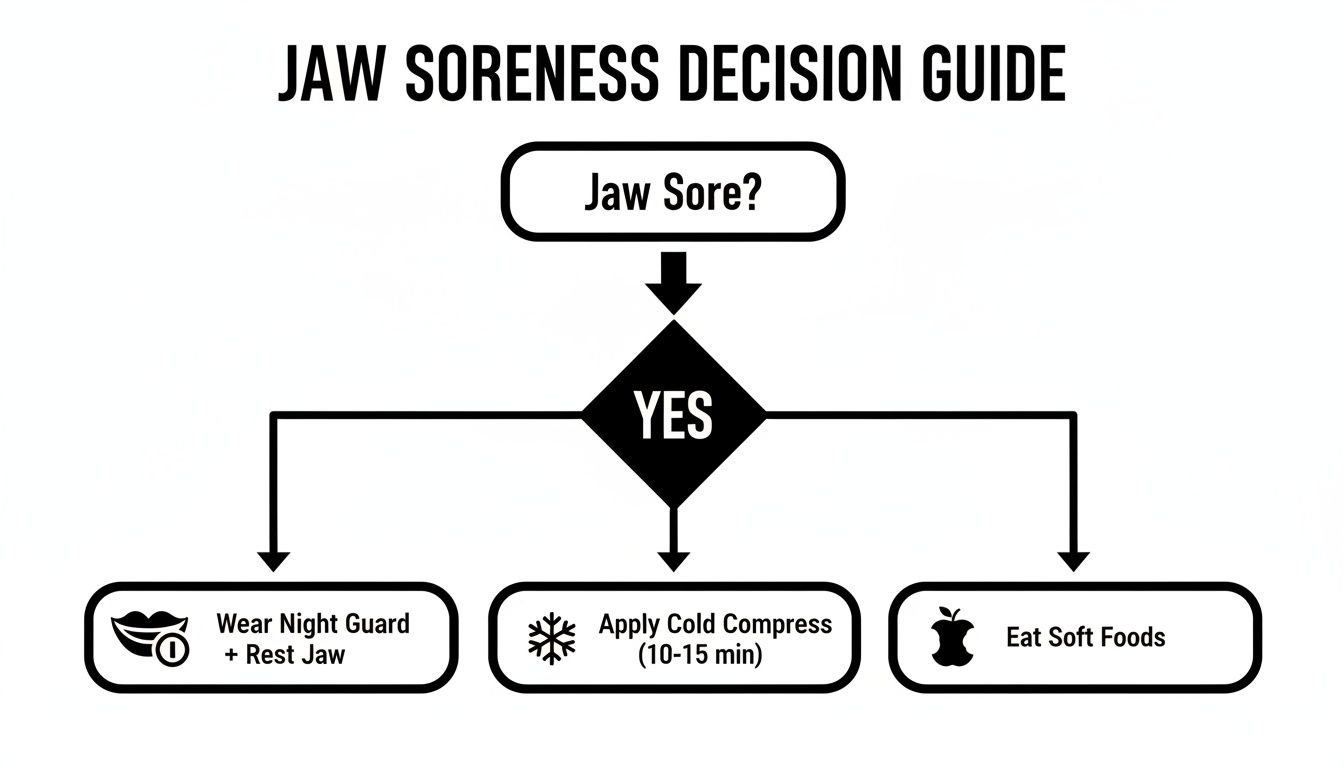
The takeaway here is pretty simple: while initial remedies are great, persistent or severe symptoms always lead to the same conclusion—see your dentist.
The Importance of Timely Professional Care
Putting these signs on the back burner can lead to chronic pain and even more damage down the road. This is especially critical for sports mouth guards, which are supposed to prevent trauma. Research shows that roughly 32% of facial trauma in children happens during sports, with baseball and basketball being the top culprits for dental injuries. An ill-fitting guard not only fails to protect you but can actually introduce a whole new set of problems. You can explore more research on the importance of properly fitted sports mouth guards and their role in preventing injury.
If your mouth guard—a device designed for protection—is causing you pain, it has failed at its primary job. That’s not something you should just “get used to.”
At Seven Oaks Dentistry & Sleep Medicine, we want to help our Wesley Chapel, FL, community understand these signals. As a private practice that’s big on mouth health education, we want you to feel empowered to seek care when you need it. Dr. Lee Daniels uses his 30+ years of experience to get to the root cause of your jaw pain from a mouth guard, making sure you get a solution that truly brings healing and relief.
How We Make Sure Your Mouth Guard Fits Perfectly
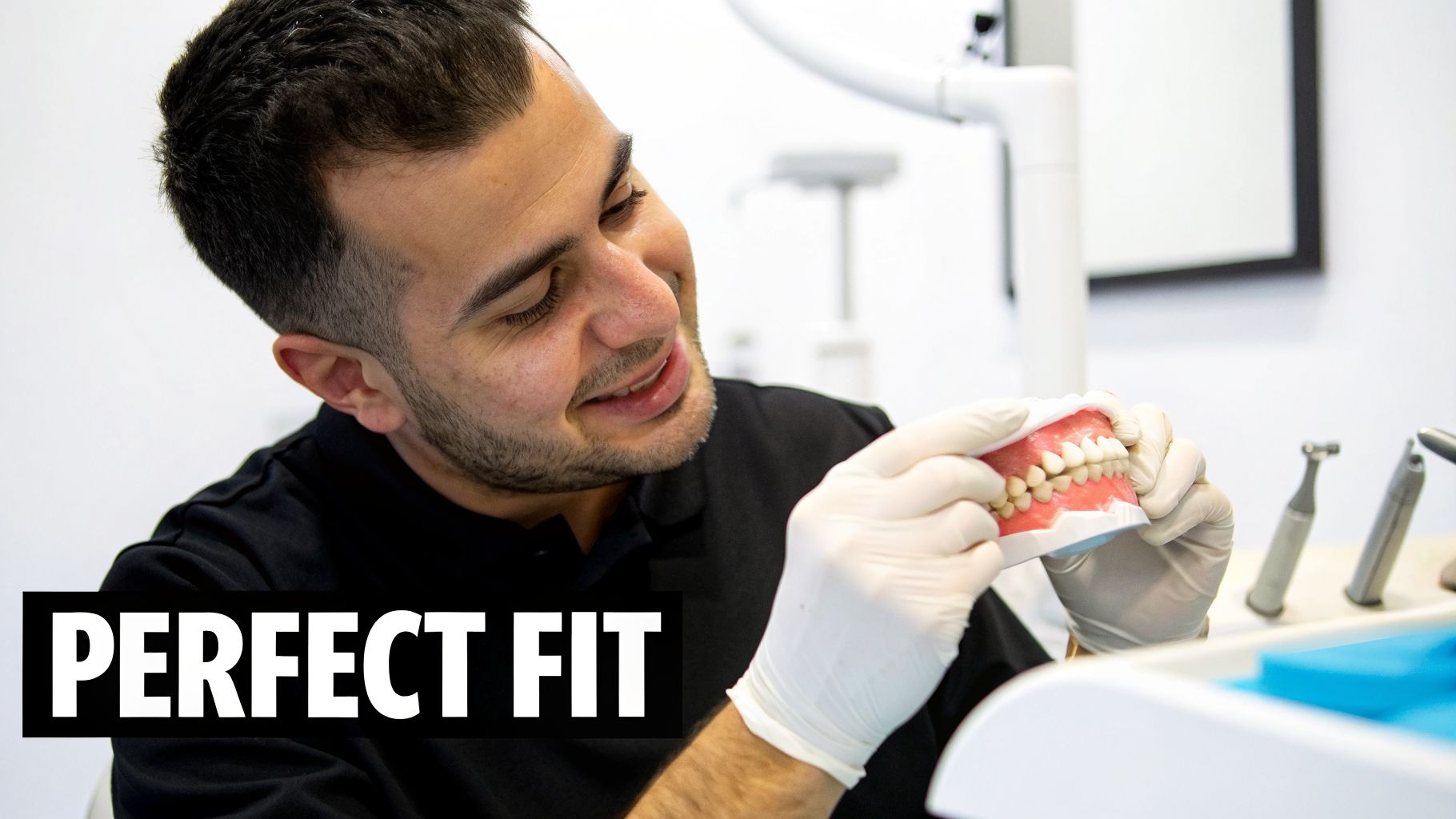
When your mouth guard is causing more jaw pain than it prevents, it’s a clear sign that a one-size-fits-all approach has failed. At Seven Oaks Dentistry & Sleep Medicine, we don’t do guesswork. Our focus isn’t just to cover your teeth—it’s to design a therapeutic appliance that finally lets your jaw muscles relax and protects your long-term oral health.
As a private practice in Wesley Chapel, FL, with a dentist who has 30+ years of experience, we’ve seen time and again how a perfectly calibrated oral appliance can transform a patient’s life. It all begins with a deep dive into your unique anatomy and specific needs.
Professional Adjustments for Lasting Comfort
If you already have a custom guard that’s giving you trouble, the fix might be a simple professional adjustment. Sometimes, a tiny tweak is all it takes to go from painful to perfect. We have several ways to get a problematic guard back on track.
- Relining or Resurfacing: Even the best guards wear down over time. We can add a fresh layer of material to the inside (relining) or smooth out the biting surface (resurfacing) to bring back that original snug fit and proper function.
- Occlusal Equilibration: This is a highly precise process of making minuscule adjustments to the guard’s biting surface. The goal is to get your teeth to meet in a balanced, stable way, which gets rid of pressure points and lets your jaw muscles fully release tension.
- Crafting a New Appliance: Sometimes, the best move is a fresh start. Using advanced digital impressions, we can create a modern guard that’s perfectly matched to your current bite and health needs.
A professional fitting is about more than just comfort; it’s a critical piece of preventive care. Properly fitted mouth guards are incredibly effective, dramatically decreasing dentoalveolar trauma to just 8% among users, compared to a staggering 48% in non-users.
More Than Just a Guard for Grinding
Not all oral appliances are built the same, and not all jaw pain is from simple teeth grinding. As a practice that deeply connects mouth health to whole-body wellness, we know how to spot when a standard night guard isn’t the right tool for the job. Your symptoms might be pointing to a different underlying issue.
For example, if your jaw pain is tied to TMJ dysfunction, a specialized TMJ splint could be the real answer. These appliances are specifically engineered to decompress the jaw joint and guide it into a more stable, comfortable position.
Or, if your discomfort is connected to airway issues, a custom sleep apnea appliance could bring the relief you need. These devices work by gently repositioning your jaw to keep your airway open while you sleep. This not only improves your breathing but can also resolve the related muscle strain. Learn more about the role of oral appliances in treating sleep apnea in our article.
At our independently owned practice, we have the freedom to recommend the exact solution your health demands, ensuring you find lasting relief right here in Wesley Chapel.
What to Expect at Your Wesley Chapel Consultation
When you’re stuck dealing with jaw pain from a mouth guard, we know that scheduling another dental appointment can feel like the last thing you want to do. But at Seven Oaks Dentistry & Sleep Medicine, we want to make that first step toward relief as easy and reassuring as possible. As one of the only private practices in the area, our entire focus is on building trust and making sure you feel heard from the moment you walk through our doors in Wesley Chapel, FL.
Your first visit isn’t about us just telling you what’s wrong. We think of it as a process of co-discovery, where you’re an active partner in figuring out your own oral health. Our goal is for you to see exactly what we see, so you can make informed, confident decisions about your care.
A Comprehensive and Personalized Examination
Your consultation will start with a warm welcome and a real conversation with Dr. Lee Daniels, a local dentist with over 30 years of experience. He’ll take the time to actually listen to your concerns—asking about your jaw pain, when it started, and how it’s messing with your daily life. From there, he’ll conduct a thorough clinical exam of your teeth, jaw joints (TMJ), and the surrounding muscles.
To get the full picture, we use advanced digital imaging. These incredibly precise, low-radiation scans let us look beneath the surface to spot any underlying issues that might be contributing to your discomfort, like bite misalignments or joint inflammation.
We believe the best care starts with a clear diagnosis. Our process is designed to demystify your symptoms, connect them to a root cause, and create a clear path toward healing and relief.
Your Path to Lasting Relief Starts Here
Once we have all the information, Dr. Daniels will sit down with you and explain your options in straightforward, easy-to-understand terms. Whether the solution is adjusting your current guard, designing a completely new custom appliance, or exploring other therapies like cosmetic dentistry or Invisalign to correct a bite issue, you’ll leave with a clear plan of action.
If you live in Wesley Chapel or the surrounding Northern Tampa areas and you’re tired of waking up with a sore jaw, we invite you to experience the difference a dedicated, private practice can make. Schedule your consultation with Seven Oaks Dentistry & Sleep Medicine today and let us help you find lasting relief.
Common Questions About Mouth Guards and Jaw Pain
When you’re dealing with jaw discomfort, it’s natural to have a lot of questions about your oral appliance. To help clear things up, we’ve put together answers to the most common questions our Wesley Chapel patients ask us about their mouth guards. Our goal is to give you straightforward answers so you can feel more confident about your treatment.
Is It Normal for a New Mouth Guard to Feel Uncomfortable at First?
Yes, a brief adjustment period is perfectly normal. Think of it like breaking in a new pair of shoes—it can take a few days for your jaw muscles to get used to the new appliance. This initial soreness should be mild and get a little better each day.
However, if you’re feeling any sharp pain or the discomfort drags on for more than a week, that’s a red flag. It’s a clear signal that the guard needs a professional look at our Wesley Chapel office.
Are Hard or Soft Night Guards Better for Jaw Pain?
This is a great question, and the answer really depends on what’s causing your pain in the first place. It’s a common misconception that soft guards are always gentler. For some people, the cushy material can actually encourage more clenching, almost like a chew toy, which can make muscle pain worse.
Hard acrylic guards are often much more effective for moderate to severe grinders and certain TMJ issues. They create a firm, slick surface that discourages clenching and helps the jaw muscles learn to relax. Getting the right diagnosis from an experienced dentist is the only way to know which material is truly right for you.
Can a Bad Mouth Guard Permanently Change My Bite?
Unfortunately, yes. Long-term use of a poorly fitting mouth guard can gradually and unintentionally shift your teeth, changing your bite over time. This is a particularly big risk with the over-the-counter “boil-and-bite” guards, since they just can’t provide the precise, stable fit needed to do their job correctly.
This is exactly why professional fitting and regular check-ins with your dentist are so important. It ensures your appliance is protecting your teeth without accidentally creating a whole new set of problems. To get a broader look at this topic, you might want to check out this comprehensive guide on how to stop jaw pain.
At Seven Oaks Dentistry & Sleep Medicine, we’re committed to finding a solution that fits your unique situation. If you have more questions or you’re ready to get lasting relief from jaw pain, contact our Wesley Chapel office today.
 Read Our Reviews

 October, 2026

