
Congratulations on taking the first step toward a straighter, healthier smile with Invisalign. This clear aligner system is a powerful tool for achieving your aesthetic and functional goals, but success hinges on your daily habits and commitment to the process. For our patients in Wesley Chapel, FL, and the surrounding North Tampa communities, understanding the specifics of your treatment is crucial for a smooth and efficient journey.
At Seven Oaks Dentistry & Sleep Medicine, we see orthodontics as a key component of complete health. As one of the only privately owned dental practices in the area, our mission, led by a dentist with over 30 years of experience, is to provide personalized, whole-body-focused care. We believe healing starts with a healthy mouth, and that begins with patient education. This guide provides a clear, actionable list of Invisalign dos and don'ts to help you navigate your treatment with confidence and reduce any anxiety you may feel.
From wear-time rules to proper hygiene and handling minor issues, these tips are designed to prevent common mistakes and keep your progress on track. Our commitment to your successful Invisalign journey in Wesley Chapel, FL, is built on trust and clear communication, including implementing proven patient engagement strategies to ensure you feel supported every step of the way. Following this straightforward advice will empower you to become an active partner in your smile transformation, ensuring the best possible results and a lifetime of oral wellness. Let's dive into the essential rules for Invisalign success.
1. Do: Wear Your Aligners 20-22 Hours Daily for Optimal Results
Of all the Invisalign dos and don'ts, this is the golden rule. Your aligners are only effective when they are in direct contact with your teeth, applying the gentle, consistent force needed for movement. Aiming for 20-22 hours of wear time each day is not just a suggestion; it is the fundamental requirement for keeping your treatment on track. Failing to meet this target means the biological process of tooth remodeling slows down or even reverses, leading to delays and potential complications.
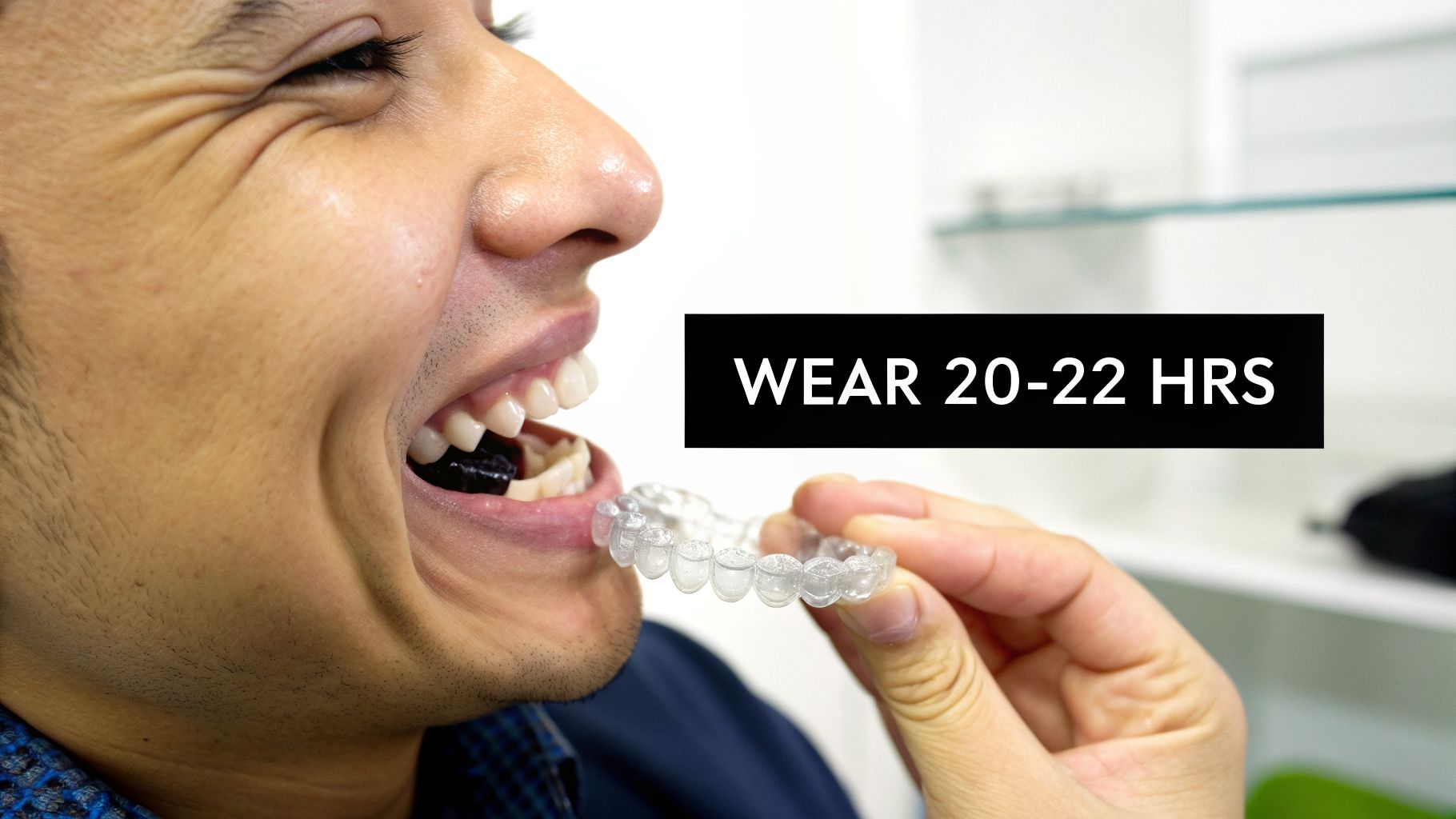
At Seven Oaks Dentistry & Sleep Medicine, we emphasize that consistent wear is the single most important factor controlled by the patient. The success of your treatment is a partnership between the expert plan from our experienced dentist and your daily discipline. Extended breaks from wearing your aligners can cause your teeth to shift back toward their original positions, making it difficult or painful to reinsert your current tray. This can disrupt the entire sequence of your treatment, often adding weeks or months to your timeline. To understand more about how compliance impacts your treatment schedule, you can explore the typical Invisalign timeline and its key factors.
Building a Routine for Success
Integrating this commitment into your daily life is key. Think of it like this: your aligners should only be out for eating, drinking anything other than cool water, and oral hygiene.
- Set Reminders: A busy professional in Wesley Chapel might set recurring phone alarms for 1:00 PM to remember to reinsert their aligners after their lunch break.
- Create a Go-Kit: A local teenager playing sports can create a compact kit with their aligner case, a travel toothbrush, and floss to manage their aligners between school and practice.
- Establish Habits: A family in Northern Tampa might make aligner care a shared routine, where everyone brushes, flosses, and reinserts their trays together before bed.
By making aligner wear a non-negotiable part of your day, you ensure your progress remains steady, paving the way for the beautiful, healthy smile you are working toward. During your initial consultation at our independently owned practice, be open with our team about your lifestyle so we can help you create a realistic and successful wear schedule.
2. Don't: Eat or Drink (Anything But Water) with Your Aligners In
One of the most critical Invisalign dos and don'ts is to always remove your aligners before eating or drinking anything other than cool water. While the convenience of Invisalign is a major benefit, leaving your aligners in during meals or while sipping your morning coffee can cause serious damage, stain your trays, and negatively affect your oral health. The plastic material is not designed to withstand the pressure of chewing or the high temperatures of hot beverages, which can lead to warping and an improper fit.

At Seven Oaks Dentistry & Sleep Medicine, we explain to our patients that this rule is about protecting both your aligners and your teeth. Eating with aligners traps food particles and sugars directly against your tooth enamel, creating a perfect environment for bacteria to thrive. This significantly increases your risk for cavities and gum inflammation—a key concern in our whole-mouth health philosophy. Staining is another major concern; colored drinks like coffee, tea, and red wine can quickly turn your clear aligners yellow or brown, defeating their discreet appearance. A warped or damaged aligner is no longer effective and may require a costly replacement, potentially delaying your treatment progress.
Building a Routine for Success
The key is to make removing your aligners an automatic habit before any meal, snack, or drink. It just needs to become part of your routine.
- Plan Your Meals: A Wesley Chapel professional can schedule their coffee break and lunch, knowing they will need a few extra minutes to remove their aligners, eat, and then complete their oral hygiene routine before reinserting them.
- Establish Family Rules: A family in Northern Tampa can create a household habit where everyone removes their orthodontic appliances, including Invisalign, and places them in their designated cases before sitting down for dinner.
- Always Be Prepared: A college student can keep an aligner case and a travel hygiene kit in their backpack. This ensures they can properly care for their aligners and teeth even with a busy and unpredictable class schedule.
By strictly following this rule, you protect your investment, maintain excellent oral health, and keep your treatment on its projected timeline. Our team is here to help you integrate these habits into your life for a smooth and successful journey to a straighter smile.
3. Maintain Excellent Oral Hygiene and Clean Aligners Properly
Proper oral hygiene and daily aligner cleaning are non-negotiable during Invisalign treatment. Because your aligners fit so snugly against your teeth, they create a perfect environment for trapping food particles and bacteria. This can significantly increase your risk for cavities, gum inflammation, staining, and unpleasant odors. Adhering to a strict cleaning regimen is a critical part of the Invisalign dos and don'ts, protecting not just your treatment progress but your overall oral health—the foundation of whole-body health.
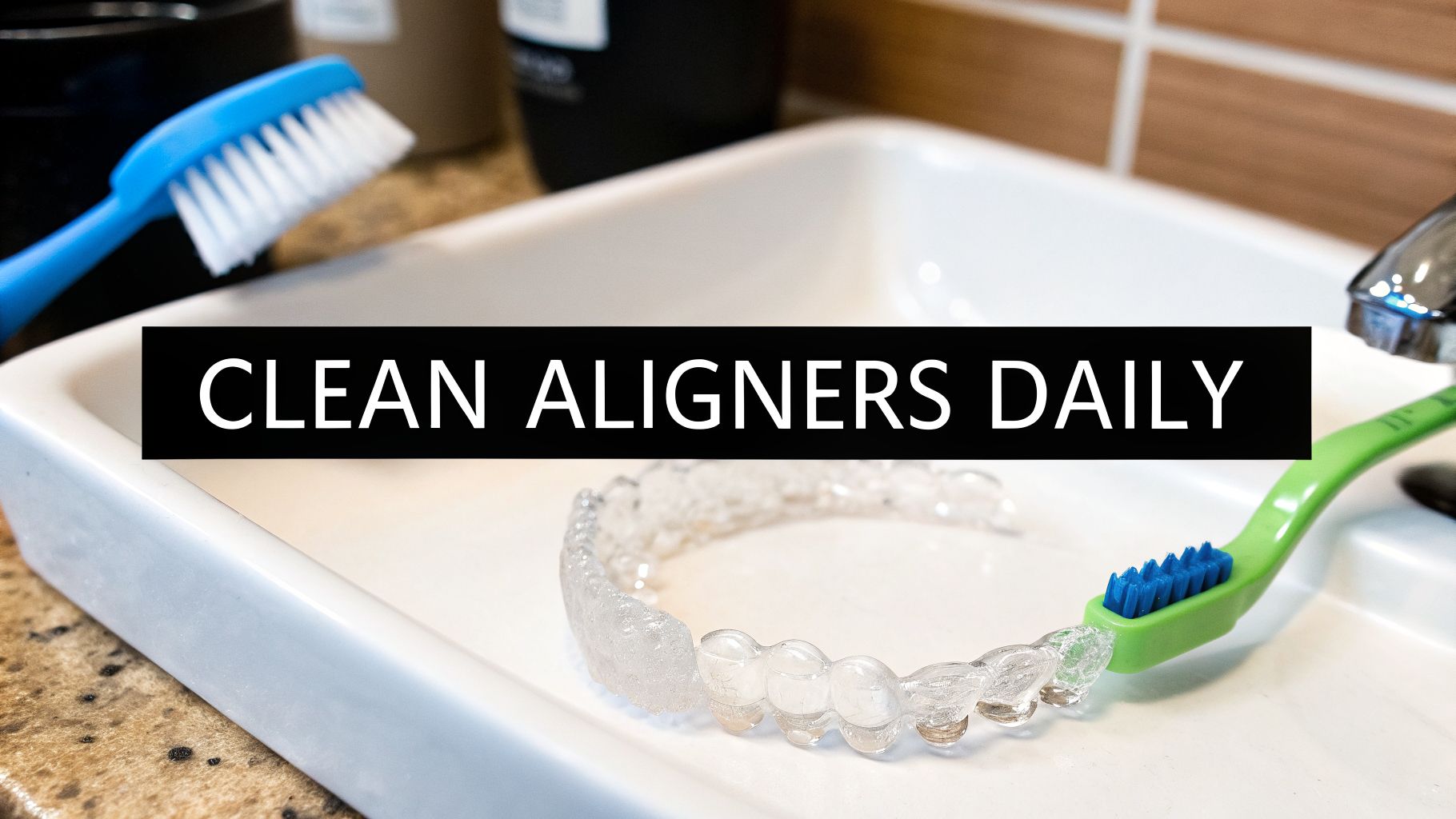
At Seven Oaks Dentistry & Sleep Medicine, a private practice dedicated to the Wesley Chapel community for over 30 years, we guide our patients on how to keep their teeth and aligners pristine. Biofilm, a sticky film of bacteria, can quickly build up on your trays, making them cloudy and unhygienic. Neglecting this step can compromise the health of your gums and teeth, which need to be in optimal condition for orthodontic movement to occur safely and effectively. To get more practical advice, you can learn more about life with clear aligners, from eating to cleaning.
Building a Routine for Success
The rule is simple: never put your aligners back in a dirty mouth. This means brushing and flossing after every single meal or snack, without exception.
- For Professionals: A busy professional in North Tampa can keep a dedicated dental kit at their office with a toothbrush, travel-size toothpaste, and flossers for quick clean-ups after lunch or coffee breaks.
- For Families: A family in Wesley Chapel can make hygiene a group activity, where everyone brushes and cleans their appliances together in the morning and before bed, reinforcing good habits.
- For On-the-Go Lifestyles: Patients who travel or have busy schedules can use portable ultrasonic cleaners or Invisalign cleaning tablets to ensure their aligners get a deep clean, even when away from home.
By making meticulous hygiene a core part of your daily routine, you prevent dental issues, keep your aligners crystal-clear, and ensure your treatment is a complete success. Our experienced team will provide personalized tips to help you integrate these essential habits into your life.
4. Don't: Stray From Your Prescribed Aligner Schedule
Each set of your Invisalign aligners is precisely engineered to achieve specific, incremental tooth movements over a designated period, usually 7 to 10 days. Sticking to the personalized schedule our experienced dentist provides is a crucial part of the Invisalign dos and don'ts. Switching to your next set of trays on time maintains the gentle, continuous pressure needed to guide your teeth efficiently. Deviating from this plan by switching too early or too late can disrupt your progress and complicate your treatment.
At Seven Oaks Dentistry & Sleep Medicine, we create a detailed timeline that maps out your entire smile journey. This schedule is not arbitrary; it is based on the biological rate at which your teeth can safely and effectively move. Progressing to a new tray before your teeth are ready can cause excessive pain and may not allow the periodontal ligaments to adapt properly. Conversely, waiting too long to switch can stall your momentum, extending your overall treatment time. Following your schedule is a commitment to the expert plan designed for you at our local, private practice.
Making Aligner Changes a Seamless Habit
Building a routine around your aligner changes ensures you never miss a beat. The key is to make each transition a simple, planned event rather than an afterthought.
- Mark Your Calendar: A professional in Wesley Chapel can set recurring digital calendar alerts for their designated "switch day," ensuring they never forget to move to the next set.
- Use Visual Cues: A family in North Tampa could use a wall calendar in the bathroom, putting a star on each day a family member is due to change their aligners, making it a shared milestone.
- Prepare in Advance: Set a reminder the night before your switch day. Use this time to ensure your next aligner tray is clean and ready, making the morning transition smooth and effortless.
By treating your aligner schedule with the same importance as your dental appointments, you empower yourself to stay on the path toward your ideal smile. If you ever have questions about your timing or if an aligner feels unusually tight or loose, bring it up at your next check-up with our Wesley Chapel team.
5. Do: Attend All Scheduled Check-ups and Progress Appointments
Think of your Invisalign treatment as a carefully charted journey, with your experienced local dentist as your guide. Your scheduled check-ups are the essential waypoints. These appointments are far more than just a quick look; they are critical opportunities for our team at Seven Oaks Dentistry & Sleep Medicine to ensure your teeth are moving precisely as planned. Missing these check-ups can allow small deviations to go unnoticed, potentially disrupting your treatment and final outcome.
Regular visits are a cornerstone of the Invisalign dos and don'ts because they confirm your treatment is progressing efficiently. During these sessions, we verify that your teeth are "tracking" correctly within each aligner, assess the health of your gums and teeth, and provide you with your next series of trays. This is also the perfect time to address any concerns or discomfort you might be experiencing. By staying consistent with your appointments, you help us keep your journey to a new smile smooth and predictable.
Building a Routine for Success
Integrating regular check-ups into your life ensures your treatment stays on course and that you feel supported every step of the way. We see many patients in Wesley Chapel who have developed smart habits to stay on top of their appointments.
- Schedule Ahead: Before leaving our office after a check-up, schedule your next one. This proactive step puts it on the calendar immediately, preventing future scheduling conflicts.
- Keep a Question Log: Keep a running list of questions or notes on your phone. A busy professional can jot down a concern about a specific tooth's movement the moment it arises, ensuring it's addressed during their visit with our dentist.
- Bring Your Aligners: Always bring your current aligner, as well as the previous and next sets, to every appointment. This allows our team to assess the fit and make any necessary mid-course corrections if your teeth are not tracking as expected.
Your commitment to these progress appointments is just as important as your daily wear time. It's an active partnership in achieving your ideal smile, ensuring any issues are caught early and your treatment finishes on time.
6. Handle and Store Aligners Carefully to Prevent Loss or Damage
Your Invisalign aligners are precision medical devices, custom-made for your unique treatment plan. While durable enough for daily wear, they are surprisingly delicate and can be easily lost or damaged if not handled with care. A lost, cracked, or warped aligner can bring your progress to a standstill, often requiring a replacement that adds expense and delays to your treatment. This is a crucial one of the Invisalign dos and don'ts, as proper storage protects your investment and keeps your smile journey on schedule.
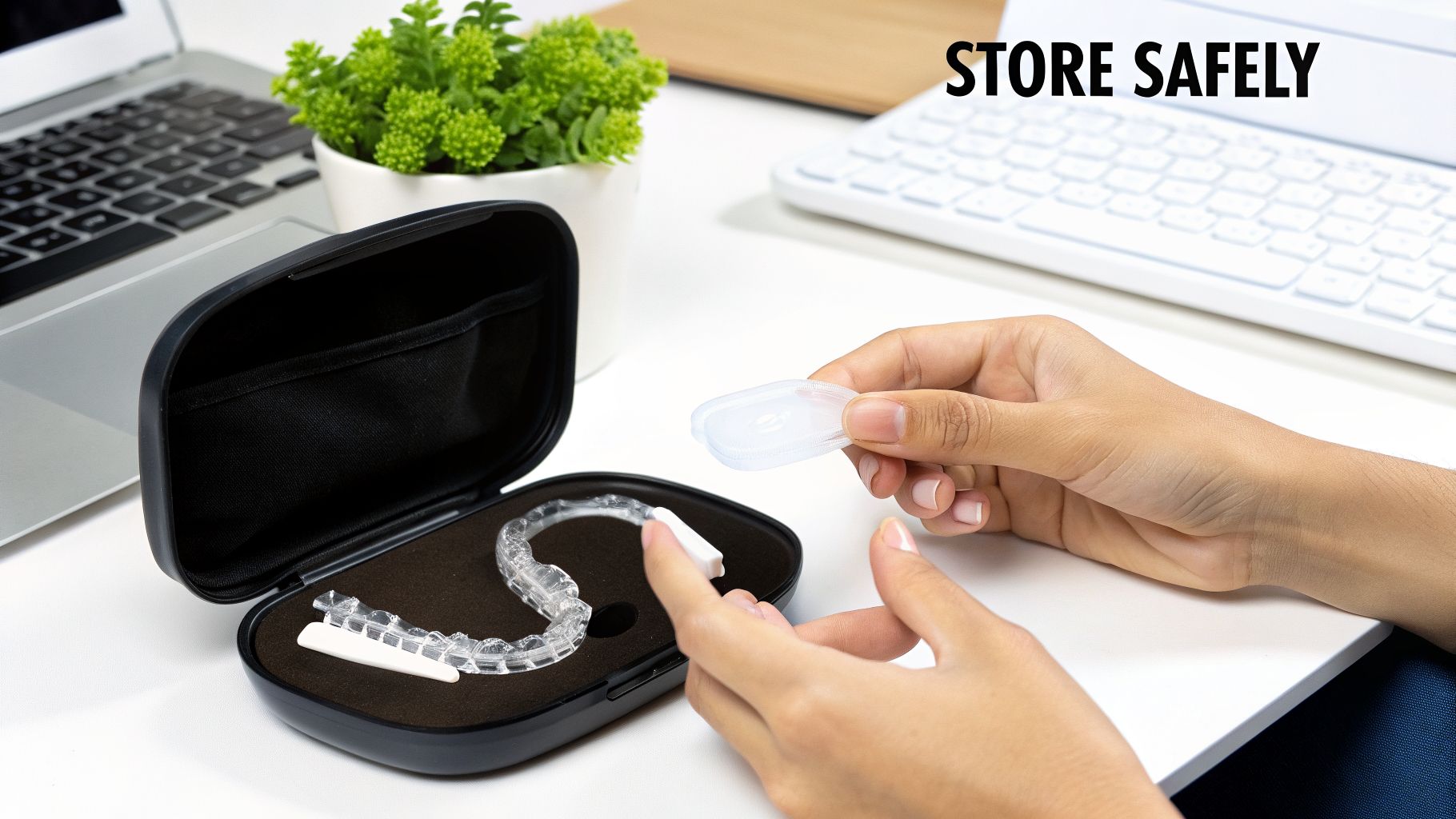
At Seven Oaks Dentistry & Sleep Medicine, we’ve seen how easily a misplaced aligner can disrupt a patient’s progress. The most common mistake is wrapping aligners in a napkin during a meal, only to accidentally throw them away. Pets are also notoriously curious about aligners left on a nightstand. Because each tray is essential for the sequential movement of your teeth, losing even one can mean waiting for a replacement to be fabricated and shipped, during which time your teeth can begin to shift back. By adopting careful habits, you ensure each aligner performs its job without interruption.
Building a Routine for Success
Creating a system for handling and storing your aligners is the best defense against loss or damage. A little foresight prevents significant headaches later.
- Always Use the Case: A Wesley Chapel professional should make it a reflex to place their aligners directly into their protective case before a meeting or lunch. The case is your aligner's only safe spot when not in your mouth.
- Keep Cases Everywhere: Have a dedicated case for home, another in your work bag or desk, and a third in your car or gym bag. This ensures you’re never caught without a safe storage option.
- Establish a Home Base: Designate a specific spot at home, like a high shelf in the bathroom, as your "aligner station." This keeps them safely away from pets and small children and prevents them from being accidentally sat on or knocked off a counter.
- Label for Recovery: Write your name and phone number on your aligner cases. An honest person is more likely to return a lost case if they know how to contact you.
If an aligner is ever lost or damaged, contact our Wesley Chapel office immediately. Our experienced dentist will provide instructions on whether to move to the next set or wear a previous set to hold your teeth's position, minimizing any delay in your treatment.
7. Do: Communicate About Discomfort and Adjust Expectations for Initial Soreness
One of the most important Invisalign dos and don'ts involves understanding the sensations that come with treatment. A new set of aligners means your teeth are being guided into a new position, so feeling some initial pressure or soreness is a completely normal part of the process. This mild discomfort is a positive sign that your aligners are working as intended, applying the gentle force needed to create your ideal smile.
At Seven Oaks Dentistry & Sleep Medicine, we want our patients to feel prepared, not worried. The soreness is typically most noticeable in the first 24-48 hours after switching to a new tray and should gradually fade within a few days. However, distinguishing between normal adjustment soreness and a genuine problem is key. If you experience sharp, persistent, or severe pain, it is vital to contact our team immediately so we can assess the situation. Open communication ensures we can address any issues, like an improperly seated aligner or an unexpected bite problem, before they disrupt your progress.
Building a Routine for Success
Knowing how to manage this temporary discomfort will help you stay compliant and comfortable. Instead of removing your aligners, which can delay your treatment, try these simple and effective strategies.
- Plan for Soft Foods: An adult in Wesley Chapel might schedule their aligner change for a Friday evening, allowing them to enjoy softer foods like soup, yogurt, and mashed potatoes over the weekend while the initial sensitivity subsides.
- Use Cold Compresses: A teenager playing sports can apply a cold pack or a cloth-wrapped bag of ice to their cheeks for 15-minute intervals to help reduce any soreness after practice.
- Time Your Pain Relievers: If you are particularly sensitive, you can take an over-the-counter pain reliever like ibuprofen about an hour before you switch to your new trays to proactively manage discomfort.
By anticipating and managing the normal adjustment period, you can move through each stage of your treatment with confidence. Never hesitate to call our Wesley Chapel office if you feel something is wrong; your comfort and successful outcome are our top priorities.
8. Don't: Make Common Mistakes That Can Derail Your Treatment
Your Invisalign journey is an investment in your smile, and avoiding a few common pitfalls is crucial for protecting that investment. Many seemingly small missteps can accumulate, leading to treatment delays, added costs, and frustration. Understanding these potential mistakes is the first step in preventing them and keeping your progress on the straight and narrow path to success. These errors range from lifestyle habits to neglecting professional guidance, and each one can compromise your final results.
At Seven Oaks Dentistry & Sleep Medicine, our 30+ years of experience has shown us how simple oversights can impact an otherwise perfect treatment plan. For instance, a busy professional in Wesley Chapel who regularly sips coffee with their aligners in might not notice the immediate effect, but over weeks, the trays become stained and can even warp from the heat. A teenager who misplaces their aligners at school and waits a week to report it may find their teeth have already shifted back, requiring a return to a previous aligner stage. These are not just hypotheticals; they are real-world scenarios that highlight the importance of diligence in all aspects of your Invisalign dos and don'ts.
Sidestepping Treatment Setbacks
Staying vigilant requires building awareness around the most frequent mistakes. The core principle is to treat your aligners and your treatment schedule with respect.
- Avoid Hot Water: Never clean or soak your aligners in hot water. The thermoplastic material is sensitive to heat and can warp, rendering the tray ineffective and uncomfortable. Always use cool or lukewarm water.
- Protect Your Aligners: When your aligners are not in your mouth, they should be in their case. Leaving them out on a napkin at lunch or on a bathroom counter is the fastest way to lose or damage them.
- Adhere to Your Schedule: Do not advance to your next set of aligners early, thinking it will speed up the process. Our dentist sets your schedule based on the precise biological timing needed for safe tooth movement. Likewise, don't fall behind.
- Stay in Communication: If an aligner is lost, cracked, or doesn't seem to fit right, contact our Wesley Chapel office immediately. Waiting until your next appointment can turn a small issue into a significant delay. Our team can provide guidance on whether to move to the next tray, go back to the previous one, or order a replacement.
8-Point Invisalign Dos & Donts Comparison
| Practice | Implementation Complexity | Resource Requirements | Expected Outcomes | Ideal Use Cases | Key Advantages |
|---|---|---|---|---|---|
| Wear your aligners 20–22 hours daily | Medium–High — requires daily discipline | Significant daily time commitment, reminders, optional wear-tracking tech | Predictable timeline, faster tooth movement | Motivated adults and teens seeking timely results | Faster, predictable treatment when followed |
| Remove aligners before eating/drinking (except water) | Low–Medium — habit change needed | Protective case, time to brush/floss after meals | Prevents staining, warping, and trapped food | Coffee/tea drinkers, frequent snackers | Preserves aligner integrity and oral health |
| Maintain excellent oral hygiene and clean aligners properly | Medium–High — frequent routines required | Toothbrush, floss, cleaning tablets, optional Waterpik/ultrasonic cleaner | Reduced cavities, clearer aligners, healthier gums | Long treatments, high-caries-risk patients, travelers | Prevents complications and keeps aligners clear |
| Follow treatment schedule and progress on time | Medium — requires strict timing adherence | Calendar reminders, clinician guidance, occasional scans | Consistent tooth movement and on-schedule completion | Patients with complex movements or fixed timelines | Avoids relapse and treatment delays |
| Attend all scheduled check-ups and progress appointments | Low–Medium — regular attendance required | Appointment time, possible digital scans or adjustments | Early detection of issues, timely plan modifications | All patients, especially complex or adaptive plans | Professional oversight reduces risk of retreatment |
| Handle and store aligners carefully to prevent loss/damage | Low — basic organizational habits | Protective cases, backup cases, labeling and safe storage | Fewer replacements, uninterrupted treatment progression | Travelers, busy families, active lifestyles | Lowers replacement costs and protects progress |
| Communicate about discomfort and adjust expectations for soreness | Low — reporting and basic management | Access to clinician, OTC pain relief, soft-foods plan | Managed soreness, timely intervention for severe pain | Sensitive patients and new-aligner transitions | Improves compliance and catches real problems early |
| Avoid common mistakes that can derail treatment | Medium — requires awareness and vigilance | Patient education, monitoring, consistent habits | Fewer complications, fewer added costs and delays | First-time users and busy patients with many obligations | Prevention is cost-effective and preserves results |
Take the Next Step Towards Your Ideal Smile in Wesley Chapel, FL
Your journey to a healthier, straighter smile is a significant commitment, and mastering these Invisalign dos and don'ts is the key to unlocking a successful outcome. The path you've embarked on is a partnership between advanced dental technology and your own daily dedication. By now, you understand that consistent wear, meticulous hygiene, and proactive communication form the foundation of an efficient and effective treatment.
Think of each guideline not as a restrictive rule, but as an empowering tool. Wearing your aligners for 20-22 hours a day directly translates to predictable tooth movement. Removing them for meals protects them from damage and keeps your treatment on track. Likewise, proper cleaning is about more than just aesthetics; it's a critical practice for maintaining your whole-mouth health and preventing issues that could cause delays. Your smile is transforming, and these habits ensure that the transformation is both beautiful and healthy.
Your Key Takeaways for Invisalign Success
Recapping the most important principles will help solidify your new routine. The small actions you take every day accumulate into major progress, so let's focus on the absolute must-dos:
- Commit to Consistent Wear: The 22-hour rule is your golden ticket. It's the single most impactful factor in your treatment's success.
- Prioritize Hygiene: Clean aligners and a clean mouth are non-negotiable. This prevents plaque buildup, tooth decay, and staining, ensuring your final reveal is as healthy as it is straight.
- Protect Your Investment: Always use your case. A lost or broken aligner is an avoidable setback that can disrupt your timeline and add unnecessary stress.
- Stay Connected with Your Dentist: Your check-up appointments are essential. They are the moments when we confirm your progress, make necessary adjustments, and provide the professional guidance you need.
Adhering to these core principles means you are actively steering your treatment toward the finish line. It’s about taking ownership of your oral health journey, a philosophy we deeply believe in at Seven Oaks Dentistry & Sleep Medicine.
The Private Practice Difference in Wesley Chapel, FL
Choosing Invisalign is the first step; choosing the right dental partner is just as important. As one of the few remaining private, independently owned dental practices in the Wesley Chapel and North Tampa area, we offer a level of personalized attention that is simply different. With over 30 years of experience, our dentist provides comprehensive care that looks at the bigger picture—how your oral health impacts your overall well-being.
We believe in healing through the mouth. A straight smile is wonderful, but a healthy, functional smile that supports your complete health is our ultimate goal. This belief shapes every Invisalign treatment plan we create.
Our focus is not on volume, but on you. We take the time to answer all your questions, from the simplest "dos and don'ts" to complex concerns about your bite and function. We are your neighbors, dedicated to serving the families of our community with integrity and expertise. This local, patient-first approach ensures you feel supported, understood, and confident from your first consultation to your final retainer.
Are you ready to see how Invisalign can fit into your life and goals? As a private practice deeply rooted in the Wesley Chapel community, Seven Oaks Dentistry and Sleep Medicine provides the expert guidance and personalized support essential for a successful Invisalign journey. Contact us today to schedule your consultation and experience a dental partnership built on trust and a commitment to your complete health.
 Read Our Reviews

 October, 2026

