
If you're looking to improve your sleep, the single most powerful habit you can build is a consistent sleep schedule. Going to bed and waking up around the same time every day—even on weekends—is the foundation for deeper, more restorative rest. Get this right, and every other effort you make will be that much more effective. For residents of Wesley Chapel, FL, understanding how your mouth and body work together is the key to unlocking truly restorative sleep.
The Foundation of Better Sleep Starts Tonight in Wesley Chapel
Imagine waking up feeling genuinely restored, energized, and ready to take on your day. This isn't a distant dream; it's an achievable reality that begins with building a stable foundation for your rest. At Seven Oaks Dentistry & Sleep Medicine, a privately owned practice in Wesley Chapel, we believe whole-body health starts at the mouth, and that includes the quality of your sleep.
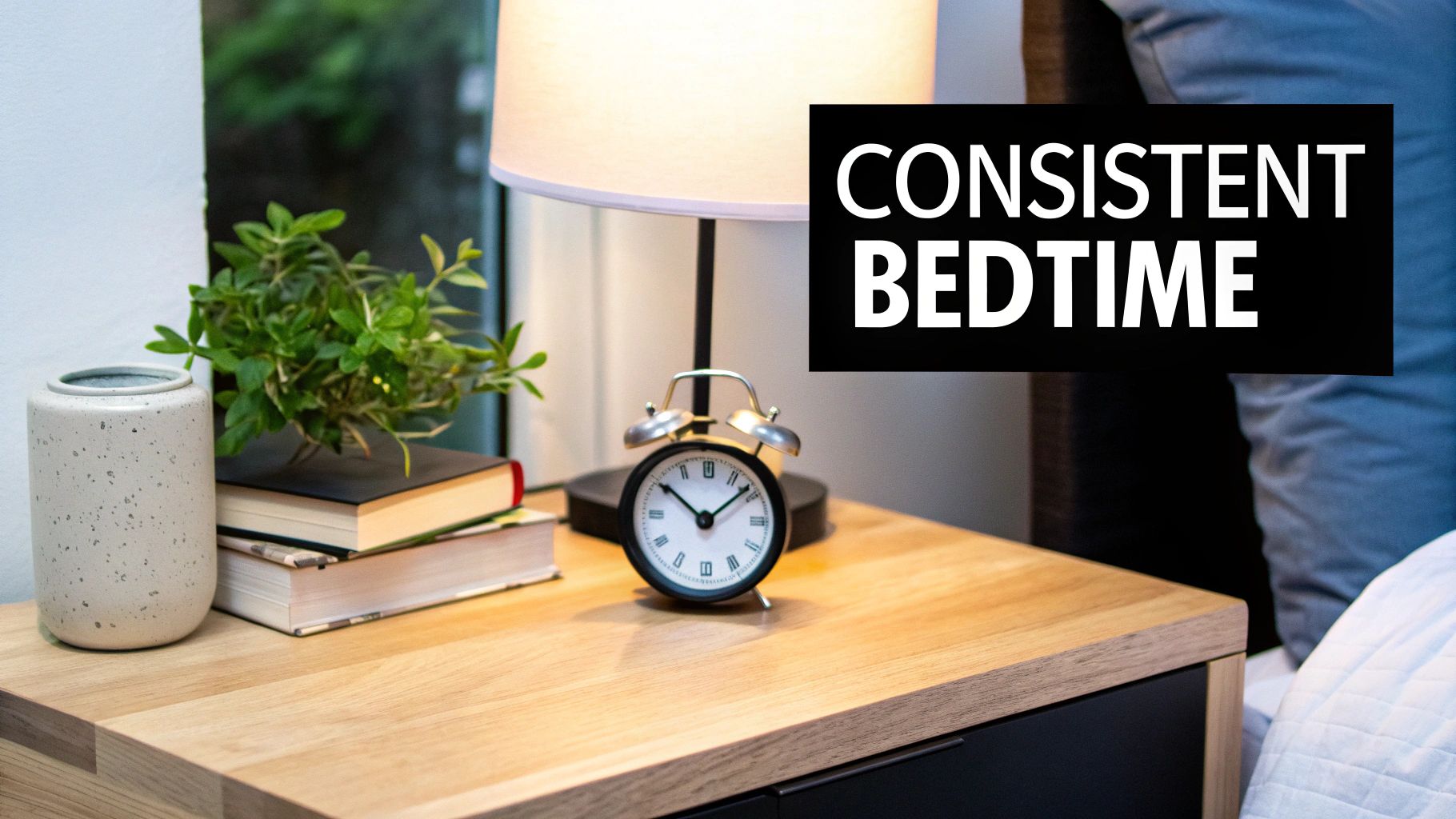
The single most impactful step you can take for better sleep is creating a consistent schedule. This isn't about being rigid. It’s about gently guiding your body’s internal clock, also known as your circadian rhythm. When you go to bed and wake up around the same time each day, you’re sending a powerful signal to your brain, regulating hormones that help you sleep and wake. Without that consistency, your body is in a constant state of jet lag. For busy professionals and families here in North Tampa, the payoff for consistency is huge.
Why Consistency Is King for Whole-Body Health
Think of your sleep-wake cycle like a well-rehearsed dance. When every step is predictable, the performance is smooth and effortless. A regular schedule trains your body for deeper, more efficient sleep cycles, helping you fall asleep faster and spend more time in restorative sleep. This foundational habit supports everything from your immune system to your mental clarity.
This simple habit has a massive impact. Studies show that countries with high sleep quality often attribute their success to balanced lifestyles and early, consistent bedtimes. You can dig into the full report on global sleep trends to see the data for yourself.
Practical Steps for Wesley Chapel Residents
Building this habit doesn't have to be complicated. Start small.
- Set a "wind-down" alarm. An hour before your target bedtime, have an alarm go off as a gentle nudge to start your pre-sleep ritual.
- Create a simple ritual. This could be as easy as changing into pajamas, brushing your teeth, and reading a few pages of a book. The activity itself matters less than doing it consistently.
- Aim for a 1-hour window. Don't stress about hitting the exact same minute every night. Just try to be in bed within the same 60-minute window.
For example, if your goal is a 10:30 PM bedtime, your wind-down alarm would go off at 9:30 PM. This consistency is the bedrock of better sleep.
At Seven Oaks Dentistry & Sleep Medicine, we know that great health starts with these foundational habits. Just like daily brushing protects your teeth from decay, a consistent sleep schedule protects your overall wellness, helping you feel your best every single day in Wesley Chapel, FL.
Your 7-Day Sleep Consistency Kickstart Plan
Ready to give it a try? Use this simple template to build a consistent sleep schedule over the next week. Remember, small, consistent steps are what lead to significant, lasting improvements in your rest.
| Day of the Week | Target Bedtime | Target Wake-Up Time | Pre-Sleep Activity (Example) | Morning Activity (Example) |
|---|---|---|---|---|
| Monday | 10:30 PM | 6:30 AM | Read a book for 20 minutes | 10-minute walk outside |
| Tuesday | 10:30 PM | 6:30 AM | Journaling | Gentle stretching |
| Wednesday | 10:45 PM | 6:45 AM | Meditate with a calming app | Drink a glass of water |
| Thursday | 10:30 PM | 6:30 AM | Listen to a relaxing podcast | 10-minute walk outside |
| Friday | 11:00 PM | 7:00 AM | Light stretching | Make a healthy breakfast |
| Saturday | 11:00 PM | 7:00 AM | Read a book for 20 minutes | Gentle stretching |
| Sunday | 10:30 PM | 6:30 AM | Journaling | Plan your week ahead |
Don't worry about perfection. The goal is to create a rhythm. After a week, you might be surprised at how much more rested you feel just from this one simple change.
Design Your Bedroom for Deep, Restorative Sleep
If your daily schedule is the foundation of good sleep, your bedroom is the sanctuary where it all happens. To genuinely improve your sleep, you have to reclaim this space for what it was always meant for: rest.
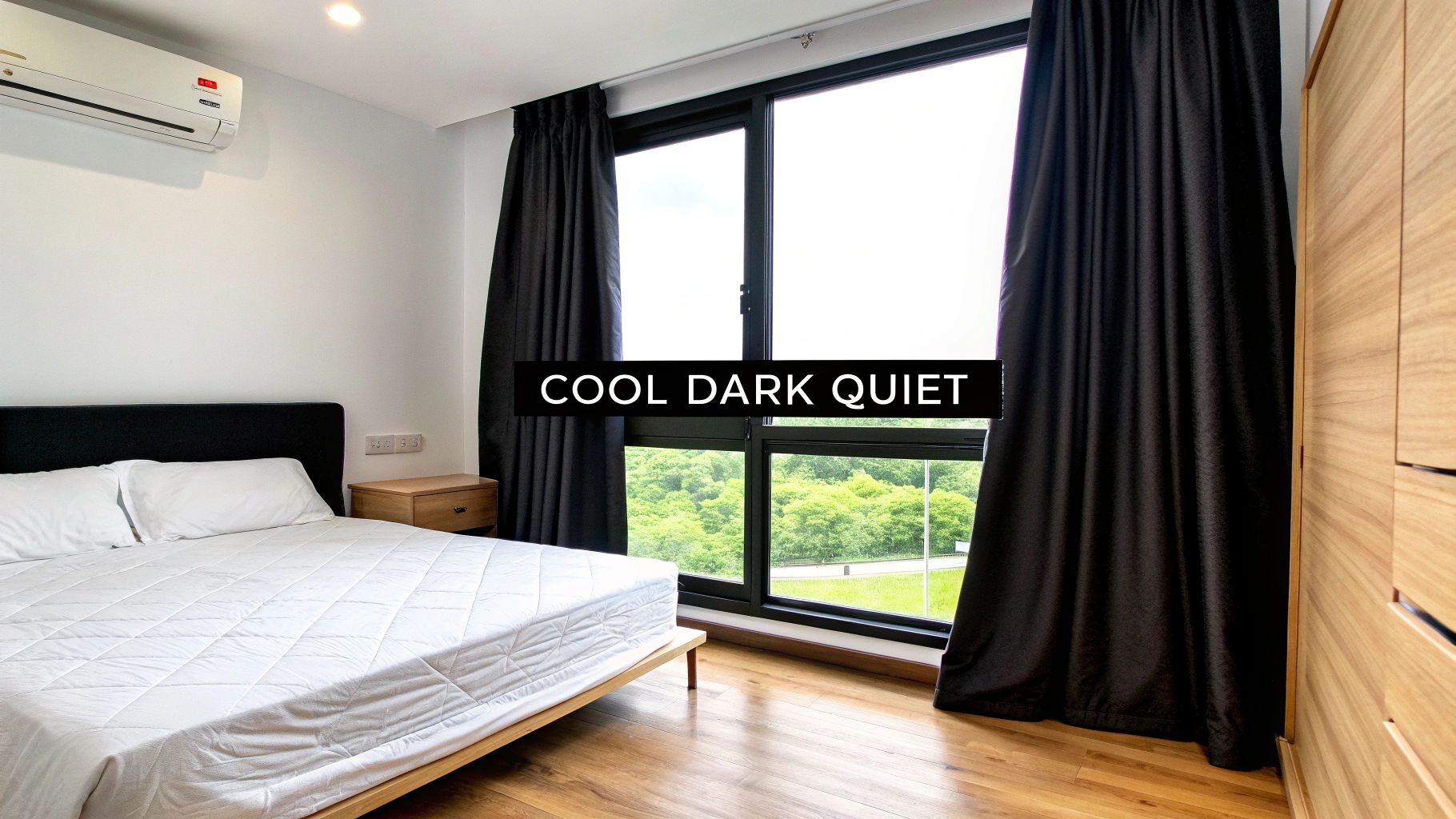
Creating an ideal sleep environment boils down to three simple, non-negotiable principles: keeping it cool, dark, and quiet. Think of these as powerful signals you send to your brain, telling it that it’s time to power down and recharge. For those of us here in Wesley Chapel, mastering these elements can make a world of difference in how you feel when you wake up.
Keep Your Bedroom Cool
Your body temperature naturally dips as you get ready for sleep. A room that’s too warm actively works against this, leading to tossing and turning. The sweet spot for sleep is surprisingly chilly—somewhere between 60 and 67 degrees Fahrenheit.
Embrace Total Darkness
Light is the master switch for your internal body clock. Even tiny amounts of it can disrupt the production of melatonin, the hormone that tells your body it's nighttime. Your goal should be pitch-black. Use blackout curtains, cover electronics, or try a sleep mask.
Create a Quiet Haven
Unexpected noise is one of the most common sleep thieves. A white noise machine can be a game-changer here. It creates a consistent, soothing sound that masks jarring noises, preventing them from startling you out of deep sleep.
Key Takeaway: Your brain is incredibly sensitive to its surroundings. A cool, dark, and quiet room isn't just about comfort—it's a direct biological message that it's safe to power down for deep, restorative sleep.
The Critical Role of a Digital Sunset
The biggest modern-day challenge to a healthy sleep environment is the blue light from our screens. It tricks our brains into thinking it's still daytime, slamming the brakes on melatonin production. Implementing a "digital sunset" is one of the most powerful habits you can build: put away all screens at least 60 minutes before you plan to go to sleep.
It’s surprising how many people overlook this. While 80% of adults want to improve their sleep, they often ignore these simple environmental fixes. You can discover more insights about global sleep habits to see just how common these disconnects are. At Seven Oaks Dentistry & Sleep Medicine, we see the consequences of poor sleep firsthand every day, from stress-related teeth grinding to serious conditions like sleep-disordered breathing. Building a sleep-promoting environment is a foundational step toward supporting your whole-body health.
Fuel Your Day for a Restful Night
Believe it or not, the quality of your sleep is often decided long before your head hits the pillow. The foods and drinks you choose all day long are powerful signals to your body, either getting it ready for rest or setting it up for a night of tossing and turning. This is a core part of mouth health education and comprehensive care—what you consume directly impacts your whole body.

Timing Your Stimulants Wisely
That afternoon cup of coffee might feel harmless, but caffeine can take 6-8 hours for just half of it to leave your system. A 2 PM coffee can easily keep your brain buzzing well past a 10 PM bedtime. For better sleep, create a firm caffeine cutoff, ideally around noon. Nicotine is another sneaky stimulant that messes with your sleep, so avoiding it, especially close to bedtime, is crucial.
The Truth About Alcohol and Sleep
It's a common myth that a glass of wine or beer before bed helps you sleep. While alcohol might make you feel drowsy, it actually wreaks havoc on your sleep quality. As your body metabolizes it, alcohol triggers frequent awakenings and suppresses REM sleep. You might fall asleep faster, but the sleep you get will be choppy and far from restorative. Global data directly links higher alcohol consumption to plummeting sleep scores. Discover more insights about the global impact of these habits.
A Better Bedtime Ritual: Instead of an alcoholic nightcap, try sipping on a warm, caffeine-free herbal tea like chamomile. It has calming properties that can gently signal to your body that it's time to relax.
Eating for Better Sleep
Your evening meal plays a big part, too. Eating a large, heavy, or spicy meal too close to bedtime can lead to indigestion and heartburn. The sweet spot is finishing dinner at least two to three hours before you plan to turn in. If you're hungry before bed, a light, smart snack can help. Try foods rich in magnesium (almonds, bananas) and tryptophan (turkey, nuts) to support your body's natural sleep processes.
At Seven Oaks Dentistry & Sleep Medicine, we know that whole-body health is completely interconnected. Just like a healthy diet supports your teeth and gums, it also lays the foundation for quality sleep. By making these mindful tweaks, you're not just fueling your day—you're investing in a more energized tomorrow, right here in Wesley Chapel.
The Surprising Connection Between Oral Health and Sleep
You’ve done everything right. You stick to a consistent bedtime, your bedroom is a pitch-black cave, and you’ve sworn off afternoon coffee. So why are you still waking up exhausted? The answer might not be in your habits—it could be in your mouth.
Many people are surprised to learn how much their oral anatomy impacts their breathing at night, which is directly tied to sleep quality. This is where general sleep advice falls short and the specialized field of dental sleep medicine comes in. Our philosophy at Seven Oaks Dentistry & Sleep Medicine is simple: whole-body health starts at the mouth. Healing through the mouth is a real possibility, especially when it comes to sleep.
From Snoring to Sleep Apnea: A Whole-Body Health Issue
For some, the problem starts with loud, chronic snoring. While it’s easy to dismiss, persistent snoring can be a major red flag for sleep-disordered breathing. This happens when your airway gets partially or fully blocked during sleep, forcing your body to struggle for breath.
The most severe form is obstructive sleep apnea (OSA), where breathing repeatedly stops and starts all night long. The structure of your jaw and the position of your tongue can cause the soft tissues at the back of your throat to collapse. Your brain then hits the panic button, waking you up just enough to gasp for air. This brutal cycle can repeat hundreds of times a night.
At its core, sleep apnea isn't just a sleep problem; it's a breathing problem. By focusing on the oral structures that form the airway, we can address the root cause, a central part of our comprehensive care approach.
Recognizing the signs is the first step. Many of our patients from around the North Tampa area come to us after realizing their symptoms go far beyond just feeling a little tired.
Common signs of sleep-disordered breathing include:
- Waking up choking or gasping for air
- Chronic, loud snoring that a partner has pointed out
- Persistent morning headaches and a dry mouth
- Severe daytime fatigue, no matter how long you were in bed
- Difficulty concentrating or "brain fog" during the day
These symptoms are a clear signal your body isn't getting the restorative rest it needs. It's estimated that a staggering 90% of cases go untreated, leaving millions to struggle. You can learn more about the prevalence and impact of untreated sleep issues to see just how widespread this problem is.
How a Dentist with 30+ Years of Experience Can Help
As a private practice dentist with over 30 years of experience, Dr. Daniels is uniquely positioned to evaluate the intricate relationship between your oral anatomy and your breathing. During an evaluation at our Wesley Chapel office, we look for telltale signs like a narrow arch, a large tongue, or wear patterns on your teeth from grinding (bruxism), which is often linked to sleep apnea.
Understanding this link is crucial. You can perfect every aspect of your sleep hygiene, but if an anatomical issue is blocking your airway, you will never achieve truly restorative sleep. It’s why exploring dental sleep medicine is a vital step for anyone who feels they’ve tried everything else. If you are curious about our complete health approach, you can read also about the connection between your mouth and sleep quality.
When to Seek Help for Your Sleep in Wesley Chapel, FL
Knowing when poor sleep is more than just a string of bad nights is the first real step toward getting your health back on track. If you’ve done everything right—optimized your room, adjusted your diet, and stuck to a routine—but still struggle, it’s a clear sign that something deeper might be going on. It’s critical to listen to what your body is telling you.
Don't ignore persistent symptoms like chronic snoring or daytime exhaustion. These are red flags that your body isn't getting the rest it needs, and it's time for a professional evaluation from a local dentist you can trust.
Beyond Standard Sleep Hygiene: The Value of a Private Practice Dentist
While good sleep hygiene is the foundation, it can't fix an underlying physiological problem. This is where the specialized expertise of a dentist trained in sleep medicine becomes invaluable.
At Seven Oaks Dentistry & Sleep Medicine, we're one of the only independently owned dental practices in the Wesley Chapel area. This allows us to build real, lasting relationships with our patients. Dr. Daniels brings over 30+ years of experience to the table, providing the kind of personalized, focused care that can make all the difference in diagnosing and treating sleep-disordered breathing. We’re here to connect the dots between your oral health and your overall wellness.
This decision tree helps visualize when it might be time to see a specialist for your sleep.
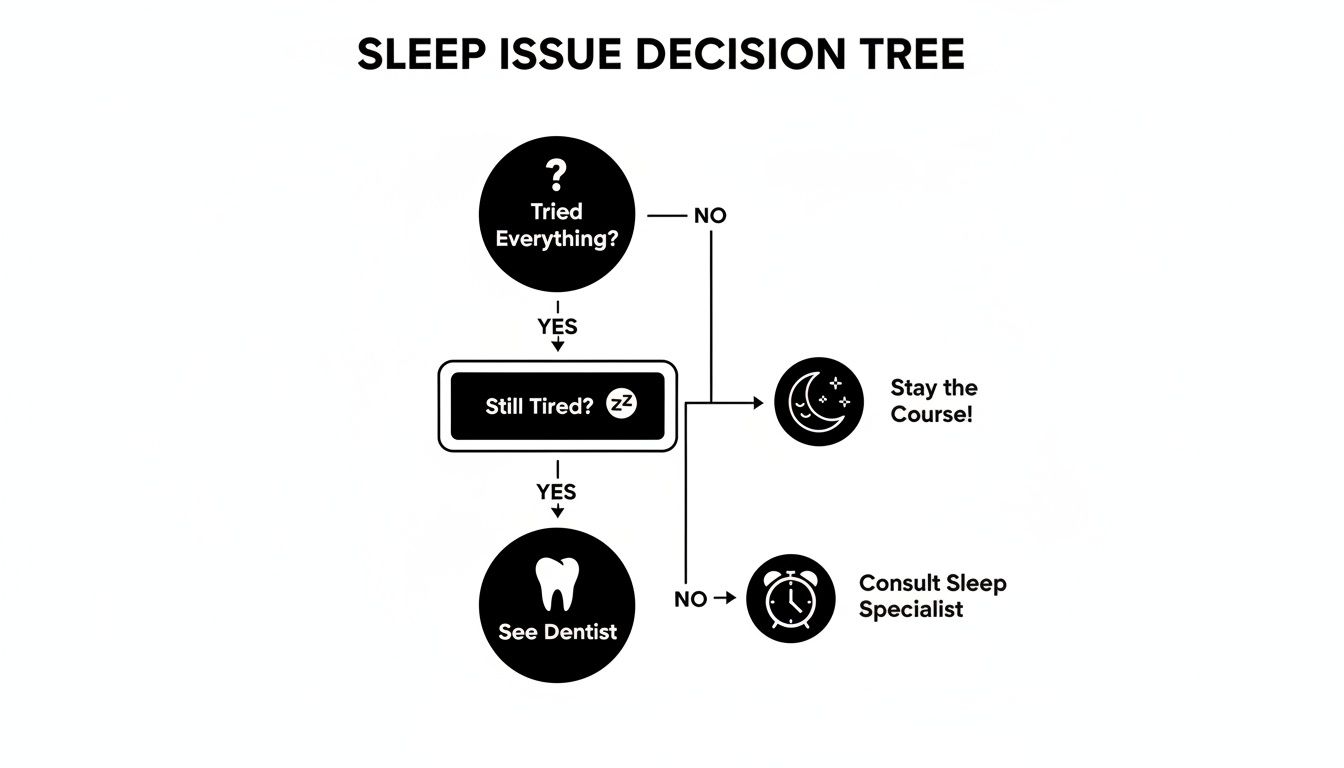
The key takeaway is simple: if you've tried all the natural remedies and still feel exhausted, the next logical step is a professional dental evaluation.
What to Expect When Visiting Our Wesley Chapel Practice
We understand that seeking help can feel intimidating, so we’ve made our process straightforward and reassuring. Your first consultation at our Wesley Chapel office is just a conversation—focused on you, your symptoms, and your health goals. We’ll perform a thorough evaluation of your oral anatomy to look for any potential signs of sleep-disordered breathing. From there, we can talk about effective, modern solutions tailored for you.
Our solutions often include:
- Custom-Fitted Oral Appliances: These comfortable devices you wear at night gently reposition your jaw to keep your airway open. For many, they are a preferred alternative to a bulky CPAP machine. This treatment is a cornerstone of restorative dentistry for sleep.
- Collaborative Care: We believe in a team approach. We work right alongside physicians to ensure you get a proper diagnosis and a treatment plan that aligns with your complete health needs.
Global surveys show many people just 'live with' poor sleep, but you don't have to. You can read the full research about these global sleep struggles to learn more. If you even suspect your sleep issues go deeper than bad habits, we encourage you to check out our guide on the signs you may need a sleep apnea evaluation.
Your Questions About Natural Sleep Improvement, Answered
As part of our work in the Wesley Chapel and North Tampa communities, we hear a lot of the same questions about sleep. Below are answers to some of the most common ones we encounter at our private practice, especially concerning the link between dental health and a truly restorative night's rest.
How Long Does It Take for Natural Sleep Strategies to Work?
You might feel the benefit of a cool, dark room tonight, but the bigger lifestyle changes require patience. For your body’s internal clock to fully adjust to a new, consistent sleep schedule, give it a few weeks. Consistency is everything. We usually tell our patients to commit to any new sleep habits for at least three to four weeks to see a meaningful difference.
When Should I Suspect a Deeper Issue Than Just Bad Habits?
This is a critical distinction. If you’ve been diligent about your sleep hygiene but you still feel terrible, that’s a huge red flag. It’s time to look deeper if you’re dealing with any of these persistent symptoms: loud, chronic snoring; waking up choking or gasping; frequent morning headaches; or overwhelming daytime exhaustion. If a partner has ever told you that you stop breathing while you sleep, that’s an urgent sign to get a professional evaluation from an experienced dentist.
What Is a Dental Sleep Appliance and How Does It Work?
A dental sleep appliance is a custom-made oral device, similar to a retainer, that you wear at night. It works by gently shifting your lower jaw forward a tiny bit. This subtle movement is enough to prevent the soft tissues in the back of your throat from collapsing and blocking your airway. By keeping that passage open, you can breathe continuously—and quietly—all night long. For many of our patients in the Wesley Chapel area, it's a comfortable, silent, and effective alternative to a CPAP machine.
Key Insight: A dental sleep appliance doesn't just quiet the noise of snoring. It addresses the physical blockage that causes the breathing problem, promoting healthier and more continuous sleep as part of a complete health approach.
Can Improving My Sleep Help My Overall Dental Health?
Absolutely. The link between sleep and oral health is a two-way street, and understanding this connection is central to our philosophy of whole-body wellness. Great sleep is crucial for your body's immune function and healing processes. If you're recovering from a dental procedure like getting dental implants or veneers, deep, restorative sleep can speed up your healing time.
Furthermore, conditions like chronic teeth grinding (bruxism) are often tied to sleep-disordered breathing. Grinding can be your body’s unconscious attempt to open the airway. By treating the root cause—the poor sleep—with an oral appliance, we often see a major reduction in grinding, protecting your teeth from severe damage. Better sleep truly means a healthier mouth and a healthier you.
If any of these questions hit home, or if you feel like you’ve tried everything and are still struggling, it may be time for a professional look. At Seven Oaks Dentistry and Sleep Medicine, our team is here to help you connect the dots between your oral health and your sleep. Schedule your consultation with our experienced, local dentist in Wesley Chapel, FL, today and take that first step toward getting your rest and your life back.
 Read Our Reviews

 November, 2026

