
As your local Wesley Chapel dentist, we get this question all the time: "How often should I really change my toothbrush?" The answer is simple and one of the easiest ways to protect your oral health. Most dentists, including our team at Seven Oaks Dentistry and Sleep Medicine, recommend getting a new toothbrush approximately every three to four months.
This isn't just a random number; it's a key guideline from the American Dental Association. But a surprising number of people let this slide, waiting far longer and making their daily brushing routine a lot less effective. At our private practice, we are committed to providing our Wesley Chapel, FL, community with the mouth health education needed to maintain not just a healthy smile, but complete health for a lifetime.
A Wesley Chapel Dentist Explains Toothbrush Replacement
That three-to-four-month rule is more than just a suggestion—it's a cornerstone of maintaining what we call "complete health." At Seven Oaks Dentistry and Sleep Medicine, we truly believe that your overall wellness begins in your mouth. As a private practice proudly serving the Wesley Chapel, FL community for over 30 years, we're dedicated to helping our patients build a foundation for a lifetime of health through simple, consistent habits.
So, why is swapping out your toothbrush so important? Think of your toothbrush as a precision tool designed for a very specific job: removing plaque and food debris from tight spaces. Like any good tool, it wears out over time.
There are two big reasons this happens:
- Bristle Wear: After a few months of daily use, those neat bristles become frayed, bent, and limp. They just can't reach the tiny crevices between your teeth or clean effectively along the gumline anymore.
- Bacterial Buildup: Your toothbrush is a magnet for microorganisms. Over time, it can harbor millions of them. Regularly replacing it minimizes your exposure to lingering germs, which is especially important if you've recently been sick.
You might be surprised to learn how many people don't follow this advice. A 2018 survey found that a staggering 42% of people don't change their toothbrush every three months, with many stretching it to six months or even longer. This habit can seriously reduce plaque removal and introduce a lot of unwanted bacteria into your mouth. You can explore more dental statistics to see how common these habits are and the impact they have.
Here at our independently owned practice in Wesley Chapel, our experienced dentist, Dr. Lee Daniels, always emphasizes that these small, consistent actions are what make the biggest difference. By providing clear, reassuring advice to families in North Tampa and the surrounding areas, our goal is to empower you with the knowledge to protect not just your smile, but your whole-body health.
Why Worn Bristles Stop Cleaning Effectively
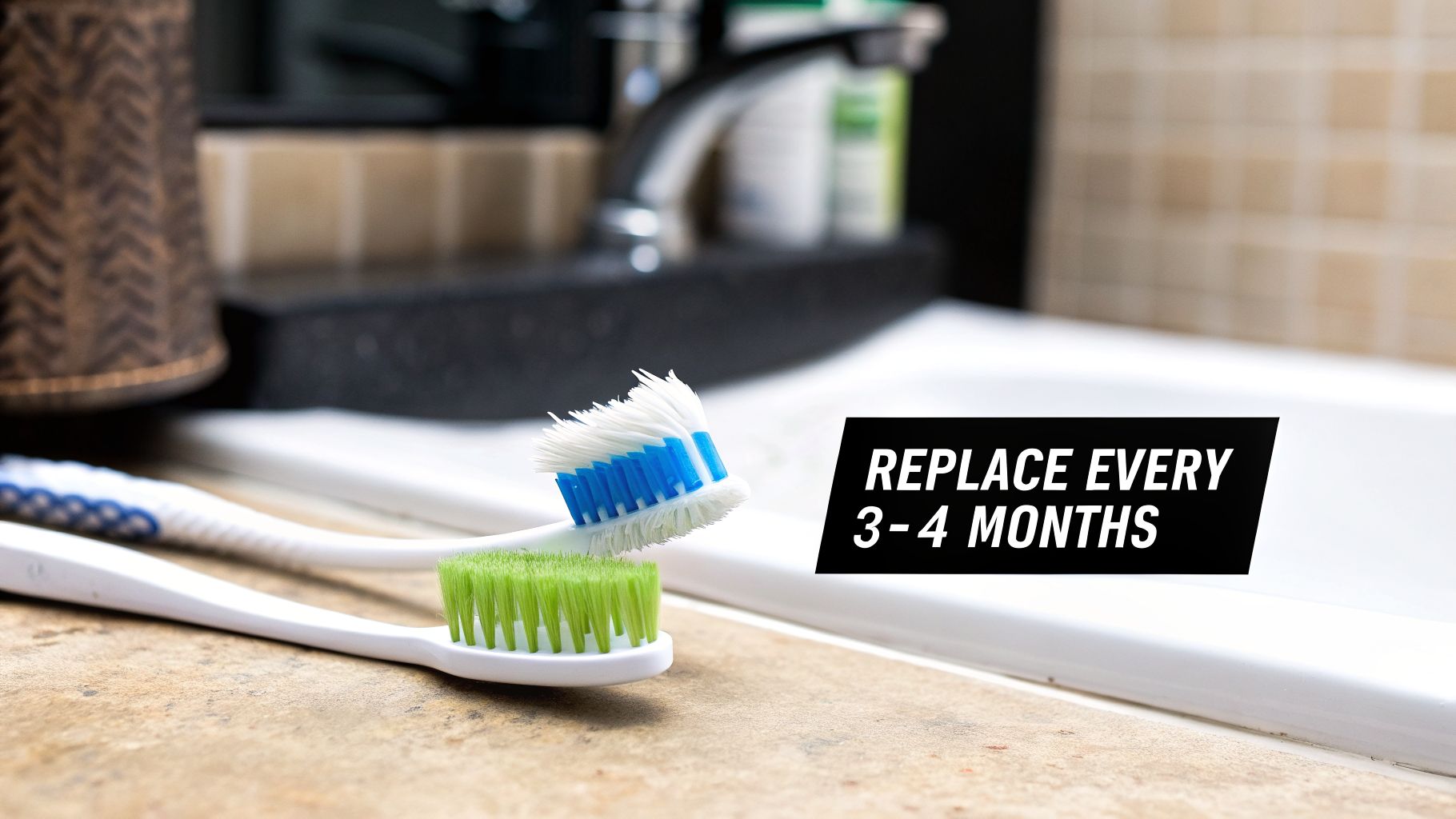
Think of your toothbrush as a precision tool, engineered for one specific job. When it’s new, the bristles are firm yet flexible, standing tall and perfectly angled to sweep away plaque and food from every nook and cranny. But after a few months of daily use, that precision tool starts to fail.
Just like a broom that’s been used to sweep the garage one too many times, the bristles on your toothbrush get frayed, bent, and matted down. This isn’t just a cosmetic problem—it's a sign of mechanical failure.
The Breakdown of Bristle Structure
After about 90 days of normal brushing, those bristles lose their structural integrity. Instead of gliding along the surface of your teeth, they start to splay out and bend away from the very spots they’re supposed to be cleaning.
When this happens, your brush can no longer effectively reach two critical areas:
- The tight spaces between your teeth.
- The crucial zone along your gumline.
This mechanical breakdown is exactly why an old, worn-out toothbrush is so much less effective. The bristles simply can't make proper contact with the surfaces where plaque loves to hide, leaving harmful bacteria behind.
This ineffective cleaning leads directly to plaque buildup, which can harden into tartar and raise your risk for cavities and gum disease—issues we help our Wesley Chapel patients overcome every day through our comprehensive care approach.
The Science of Ineffective Cleaning
Research backs this up. Studies have shown that brushes with even moderate wear remove significantly less plaque than brand-new ones. Experts recommend replacing your toothbrush long before the bristles look completely splayed out. This is especially true when you consider most people only brush for 45-70 seconds, far short of the recommended two minutes.
Understanding this simple mechanical reality makes it clear why knowing how often you should get a new toothbrush is so important. Swapping it out on schedule ensures your daily efforts are actually protecting your smile. To get the most out of every brush, check out our guide on proper brushing techniques.
The Hidden Germs on Your Old Toothbrush
Beyond just becoming less effective, an old toothbrush can quickly become a health risk. While you can easily see when bristles get frayed, the real problem is the unseen world of microbes that sets up camp on your brush. Your bathroom is typically a warm, moist environment—the perfect breeding ground for bacteria, fungi, and viruses to thrive.
These microorganisms, both from your own mouth and the surrounding air, can colonize your toothbrush bristles between uses. Over time, your brush can accumulate millions of bacteria, turning a tool meant for cleaning into a source of contamination. This directly connects to our ‘whole body health starts at the mouth’ philosophy at Seven Oaks Dentistry and Sleep Medicine, as a simple oral hygiene habit is crucial for protecting your overall wellness.
It's absolutely critical to get a new toothbrush after any illness like a cold, flu, or strep throat. Continuing to use the same brush can reintroduce those germs into your system, potentially leading to reinfection.
Protecting Your Whole-Body Health
For families in the Wesley Chapel and North Tampa communities, this is a powerful and easy way to stay healthier, especially during cold and flu season. An old toothbrush can easily become what is known as a fomite—an everyday object that harbors and transmits germs. This is exactly why maintaining a fresh toothbrush is a key part of our "mouth health education" philosophy—because what happens in your mouth really does affect your entire body.
You can learn more about how germs spread through everyday objects with this helpful guide on fomite transmission. This simple knowledge empowers you to make better choices for your family's health, starting with something as simple as a clean toothbrush.
The Telltale Signs You Need a New Toothbrush
While the three-month rule is an excellent guide, you don't have to rely solely on your calendar. Your toothbrush gives you clear visual cues when it's time for a replacement, and learning to spot them empowers you to take a more active role in your family's oral health.
Think of new toothbrush bristles like a well-kept broom, with all its fibers standing straight and ready to sweep effectively. Old bristles, on the other hand, are like a worn-out, matted broom that just pushes dirt around instead of cleaning it up.
So, instead of just waiting for the 3-month mark, start checking your brush for these telltale signs:
- Frayed or Splayed Bristles: This is the most obvious sign. If the bristles are bent, pointing in all different directions, or look "fluffy," they’ve lost their ability to effectively clean along the gumline and between your teeth.
- Matted Texture: Do the bristles look clumped together, even when they're dry? This matting prevents them from reaching into the small crevices where plaque loves to accumulate.
- Discoloration: Take a close look at the base of the bristles. Any dark discoloration can be a sign of mold or bacterial buildup—a major red flag for your mouth's health.
This simple decision tree helps visualize when it's time for a new toothbrush.
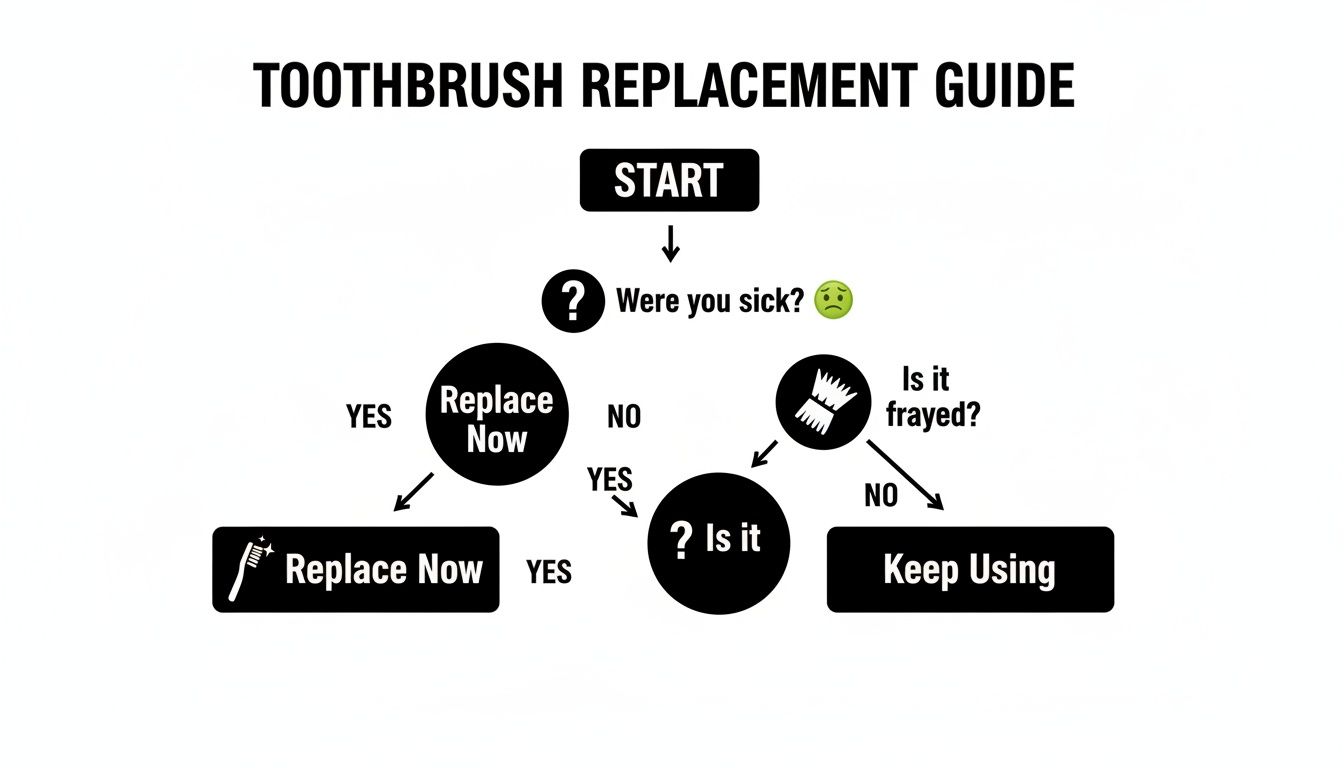
As the flowchart shows, being sick is an immediate reason for a swap, but visual bristle wear is the next most important factor to watch for.
Beyond Visual Cues
While major dental associations worldwide suggest a three-month replacement schedule, the clinical data often points back to visible wear being the most important indicator. One study even highlighted that some brushes can still be effective after three months if they show minimal wear. You can learn more about the science behind toothbrush wear and replacement guidelines.
It’s also important to remember these rules apply equally to both manual toothbrushes and the replaceable heads on electric models.
Providing this kind of practical, actionable advice is just one way we help our Wesley Chapel patients maintain excellent oral hygiene between visits.
When Your Toothbrush Needs Changing Sooner
The three-to-four-month guideline is an excellent rule of thumb for knowing how often to get a new toothbrush. But honestly, it's not a one-size-fits-all rule. At our practice, we often advise families that certain situations call for a much quicker replacement to keep their mouths as healthy as possible.
This kind of personalized guidance is at the heart of our patient-focused care. We believe in going beyond generic advice to provide recommendations that actually fit your family’s unique life, ensuring everyone is brushing as effectively as they can.
Special Considerations for Your Family
Certain life stages and health conditions can really speed up toothbrush wear and tear, meaning you'll need to swap them out more often. We see these situations all the time with our patients in Wesley Chapel and always recommend a more watchful eye.
- Children: Kids are notoriously tough on their toothbrushes. They often chew on the bristles or brush with way too much force, causing them to fray and splay out much faster than an adult’s.
- Orthodontics: Braces, clear retainers, and aligners like Invisalign create all sorts of extra nooks and crannies for bacteria to hide. The brackets and wires can also shred bristles in no time, making the brush far less effective. Our team can help you navigate this with services like our clear retainers and other cosmetic dentistry options.
- Compromised Immune Systems: If you or a family member has a weakened immune system, changing the toothbrush more frequently is a simple but powerful way to minimize exposure to bacteria that builds up on the bristles.
Your toothbrush is a primary tool for "healing through the mouth." For those with orthodontic appliances or specific health needs, a fresh, effective toothbrush isn't just a recommendation—it's a critical part of your complete health strategy.
At Seven Oaks Dentistry & Sleep Medicine, we tailor our advice to you. If you're in Wesley Chapel, FL, or the surrounding North Tampa area and have questions about your family's oral care routine, we're here to provide the personalized answers you deserve.
Your Partner in Complete Health in Wesley Chapel, FL
Small habits, like swapping out your old toothbrush, are the real building blocks of a healthy life. At Seven Oaks Dentistry and Sleep Medicine, we see this as the heart of "complete health"—a journey that always begins with your mouth. This simple but powerful idea—healing and educating through oral health—is what truly sets our practice apart.
Led by Dr. Lee Daniels, we're an independently owned private practice offering a refreshingly personal alternative to the corporate dental chains. With over 30+ years of experience, our focus has always been on building lasting relationships with our patients from Wesley Chapel, FL, and the greater North Tampa community. We want to be the team you trust, year after year.
We are one of the only private practice dentists in the area, committed to providing honest, comprehensive care that always puts your long-term wellness first.
Whether you're curious about cosmetic dentistry, considering dental implants, or looking for real solutions for sleep apnea, our team provides personalized care all under one roof. We think of ourselves as your partners in wellness, dedicated to making sure your oral health supports your overall vitality for years to come.
To learn more about how our local dentist team approaches your care, feel free to explore our general dentistry services. We’re here to help you and your family achieve lasting health, starting with a confident smile.
Common Questions About Toothbrush Care
To round out everything we've talked about, let's tackle a few common questions we hear all the time at our Wesley Chapel office. These quick tips are easy to remember and make a big difference in your daily routine—which is a cornerstone of your overall health.
How Should I Store My Toothbrush?
Always store your toothbrush upright and in the open air. This lets it dry completely between uses, which is key. The last thing you want is to tuck it away in a closed container or a dark drawer, as that's a perfect breeding ground for bacteria.
Should I Get a New Toothbrush After a Dental Cleaning?
Yes! Think of a professional cleaning as hitting the reset button for your oral health. Starting fresh with a new toothbrush afterward is the best way to maintain that just-cleaned feeling with a tool that’s in peak condition and free of any old bacteria.
What Kind of Bristles Are Best?
We, along with the American Dental Association, always recommend using a toothbrush with soft bristles. It's a common misconception that medium or hard bristles clean better, but they can actually be too abrasive, damaging your gums and wearing down your tooth enamel over time. Soft bristles are just as effective at cleaning without risking harm to your smile.
For more personalized advice on how your oral hygiene impacts your complete health, the team at Seven Oaks Dentistry and Sleep Medicine is here to help. Schedule your consultation today with a trusted dentist in Wesley Chapel, FL, by visiting https://dentistwesleychapel.com.
 Read Our Reviews

 October, 2026

