
Considering dental implants is a major step toward reclaiming your smile, and it’s completely natural to have questions about the dental implant failure rate. The great news is that modern dental implants have an overwhelmingly high success rate, often exceeding 95-98%. This guide is designed to replace concerns with confidence by exploring the facts behind implant success and introducing you to a trusted local provider in Wesley Chapel, FL.
Your Trusted Guide to Dental Implants in Wesley Chapel, FL
When a tooth is missing, it affects more than just your smile—it can impact your confidence, your ability to enjoy food, and even your overall well-being. At Seven Oaks Dentistry & Sleep Medicine, we understand these challenges intimately and believe that knowledge is the first step toward a lasting solution. We are one of the only independently owned dental practices in the area, proudly serving Wesley Chapel, FL, and the surrounding communities with a commitment to educating our neighbors about their best oral health options.
Our entire approach is rooted in "complete health," which means we see a successful dental implant as a cornerstone of your whole-body wellness. Your whole body health starts at the mouth, and it's not just about filling a gap in your smile; it's about restoring full function, preserving precious jawbone health, and creating a stable foundation that will serve you for years to come. This guide will walk you through everything you need to know, from success rates to aftercare, in a way that feels reassuring and empowering.
Why Your Choice of a Private Practice Dentist Matters
The success of a dental implant isn't just a statistic; it's the direct result of meticulous planning, surgical skill, and personalized aftercare. This is where choosing the right dental partner becomes the single most critical factor in your journey.
- Experience and Expertise: With over 30+ years of experience, our dentist brings a depth of knowledge to every single procedure. That level of hands-on skill is invaluable for minimizing risks and ensuring optimal, predictable outcomes. An experienced dentist is your best asset.
- Personalized Care: As a private practice dentist, we build genuine, long-term relationships. You're not just another patient on a schedule; you are a valued member of our practice family. That continuity of care is absolutely vital for treatments like implants that require ongoing monitoring.
- Comprehensive Approach: We always look at the big picture—your complete health and whole mouth health. Before even recommending an implant, we conduct a thorough assessment to ensure you are a great candidate, a key step often overlooked in less personal, high-volume settings. You can learn more about how to find the right dentist for your needs in our article on choosing a dentist for long-term success.
For dental practices aiming to grow and attract more patients seeking services like dental implants, understanding effective dental marketing strategies is crucial. Our focus, however, remains squarely on patient-centric care and achieving the best clinical results for our community in Wesley Chapel and the greater North Tampa area.
Demystifying the Real Dental Implant Failure Rate
When you're considering a big investment in your health like a dental implant, it's completely natural to wonder about the risks. The term "dental implant failure rate" might sound a little scary, but the reality is that the data tells a powerful story of reliability and long-term success. The vast majority of dental implants integrate perfectly and last for decades, becoming a seamless part of your life.
Think of it like building a solid foundation for a house. When you use top-notch materials (the implant), hire an experienced builder (your dentist), and stick to the blueprint (the surgical plan), that structure is built to last a lifetime. The same principle applies here, and the statistics are overwhelmingly positive.
This chart really drives home the difference between success and failure rates in dental implant procedures.
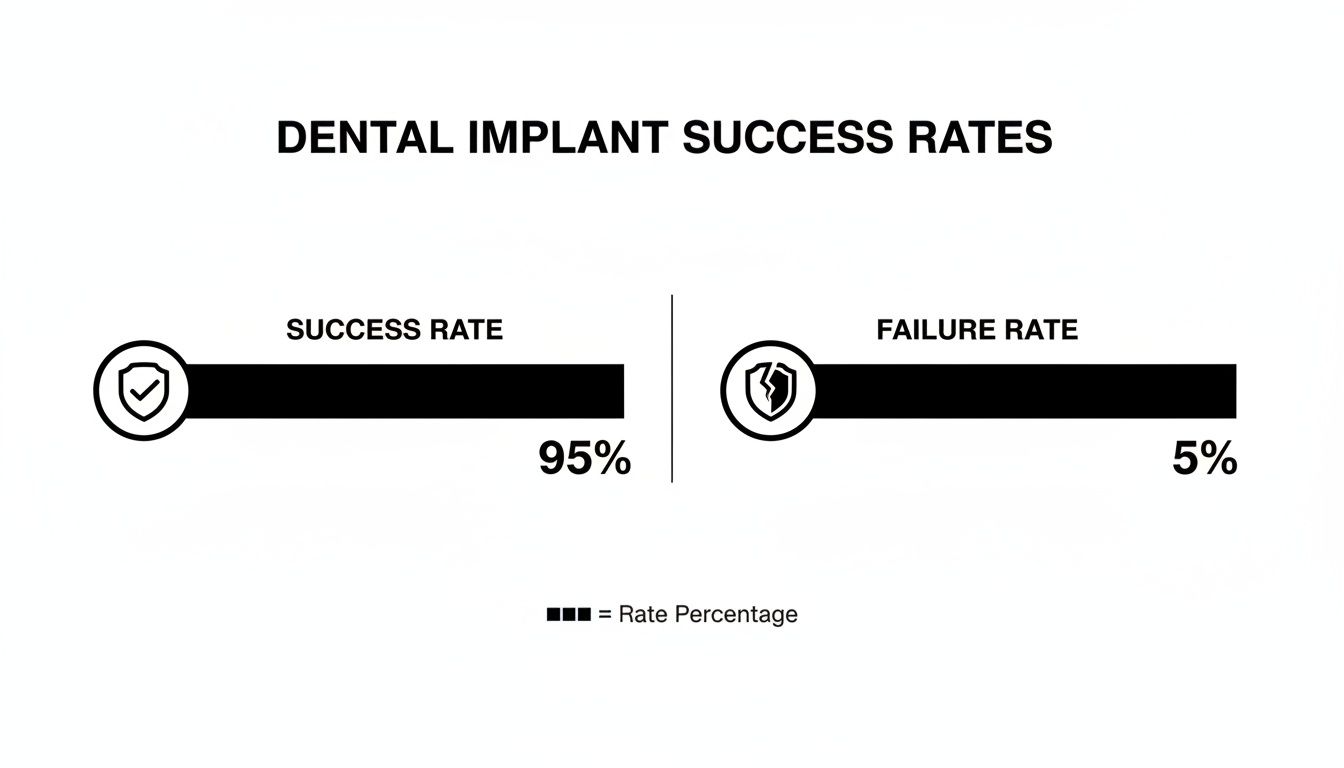
As you can see, success is the norm, not the exception. It’s what makes dental implants one of the most dependable treatments in modern restorative dentistry.
Understanding Early vs. Late Failure
To really get a handle on the dental implant failure rate, it helps to break down potential issues into two main buckets: early failure and late failure. This distinction helps you view your implant as a long-term investment in your health, with different things to watch for at each stage.
Early Failure happens within the first few months right after surgery. This is almost always related to the initial healing phase, a process called osseointegration, where the implant is supposed to fuse with your jawbone.
Late Failure can pop up months or even years after the implant has already successfully integrated. These problems are usually tied to long-term care, lifestyle factors, or mechanical issues.
"The overwhelming success of dental implants is a testament to decades of innovation. True failure is rare, and most potential issues can be effectively managed or prevented with expert care and patient diligence."
Understanding this timeline is actually quite reassuring. It shows that once your implant is successfully healed and integrated, keeping it that way is largely in your control—with a little help from your dental team, of course.
A Closer Look at the Numbers
The statistics on dental implants are incredibly positive. Worldwide, the average failure rate is just 3.1%, which means a stunning 96.9% success rate. Here in the U.S., the numbers are just as strong, with a success rate hovering around 94%. Studies that track implants over long periods confirm just how durable they are, with one showing 97% success after 10 years and an impressive 75% still functioning perfectly after 20 years. You can dig into more of the data on these implant statistics and their longevity on impressionsdental.com.
Diving a bit deeper, the numbers tell us even more:
- Early Failures: These account for the lion's share of problems, making up about 83.48% of all cases. They're often caused by things like infection, pre-existing gum disease, or too much pressure on the implant before it has fully healed.
- Late Failures: Making up only 16.52% of failures, these are typically due to factors like peri-implantitis (an infection around the implant) or chronic bone loss that develops over time.
At Seven Oaks Dentistry & Sleep Medicine, our main focus is on minimizing the risks of early failure through meticulous surgical planning and post-op care. Our comprehensive care approach means we also arm you with the knowledge to prevent late-stage problems, empowering you to protect your investment for the long haul. Choosing a dentist with over 30+ years of experience means you have an expert guiding you every step of the way, minimizing risks and maximizing your path to a lasting, healthy smile in Wesley Chapel, FL.
Why Some Dental Implants Fail: Common Causes and Risk Factors
While dental implants have an incredible track record, it's smart to know what can cause that small percentage of cases to fail. This isn't about creating anxiety—it's about empowerment. When you understand what can go wrong, you can partner with your dentist to make sure everything goes right.
At Seven Oaks Dentistry & Sleep Medicine, we believe an informed patient is a successful one. That’s why we’re always open about the potential causes of implant failure. Understanding these factors is the first step toward preventing them, which is central to our philosophy of healing through the mouth and safeguarding your smile investment from every angle.
Biological and Health-Related Factors
Your body’s ability to heal is the single most important factor for implant success. The entire process hinges on a biological fusion called osseointegration, where the implant becomes one with your jawbone. Anything that disrupts that healing can put the implant at risk.
This is exactly why we start every implant journey at our Wesley Chapel practice with a thorough health assessment. Certain health conditions and lifestyle habits can interfere with this critical healing process and increase the dental implant failure rate.
Common biological risk factors include:
- Uncontrolled Diabetes: This condition can slow down your body's natural healing response and impair circulation, making it much harder for the bone to securely integrate with the implant.
- Smoking or Tobacco Use: Smoking constricts blood vessels and starves healing tissues of the oxygen and nutrients they need. This drastically raises the risk of both infection and implant failure.
- Poor Bone Quality or Quantity: An implant needs a solid, dense foundation to anchor into. If your jawbone is too thin or soft, it simply can’t provide the stable support the implant needs.
- Active Gum Disease (Periodontitis): Trying to place an implant in a mouth with untreated gum disease is like building a house on a shaky foundation. The same bacteria that attack your gums can attack the tissues around an implant, leading to a condition called peri-implantitis.
The Role of Bone Quality and Systemic Health
The connection between your overall health and an implant's survival isn't just a theory—it's backed by a mountain of research. For instance, long-term studies clearly show that risk factors like uncontrolled diabetes are directly correlated with higher failure rates over time.
Bone quality is another huge predictor of success. One study that analyzed over 10,000 implants found that those placed in very soft, low-density jawbone (Type IV) had a failure rate of 20.6%. That’s a massive difference compared to the high success rates seen in denser bone. This is the kind of data that helps experienced dentists create predictable, successful outcomes. You can dive deeper into these long-term influences on implant survival on pmc.ncbi.nlm.nih.gov.
This is precisely why we reject a one-size-fits-all approach at Seven Oaks Dentistry. Our dentist’s 30+ years of experience guide a meticulous evaluation process, ensuring your treatment plan is built around your specific health profile—not just the gap in your smile. This is the benefit of choosing an experienced, private practice dentist.
Mechanical and Iatrogenic Factors
Beyond your body's biology, implant failure can also come from mechanical or procedural issues. The good news is that these are often preventable with the right expertise and technology.
Iatrogenic factors are complications that arise from the surgical procedure itself, which is where the skill of the implant dentist is absolutely non-negotiable. An improperly placed implant can create excessive force on the bone, look unnatural, and feel unstable. Even overheating the bone during drilling can damage the surrounding cells and stop osseointegration in its tracks.
Mechanical factors, on the other hand, relate to the implant parts or the forces they endure.
- Implant Fracture: It’s rare with today’s high-quality materials, but an implant post can fracture under extreme or poorly distributed biting pressure.
- Occlusal Overload: This is just a technical way of saying there’s too much biting force on the implant, especially before it has fully healed. It’s often linked to teeth grinding (bruxism) or a crown that wasn’t designed to distribute bite forces correctly.
Choosing a skilled, local dentist in a private practice like Seven Oaks Dentistry is your best defense against these types of problems. Our seasoned expertise ensures precise surgical placement, while our commitment to ongoing care helps us catch and manage issues like teeth grinding before they can ever threaten your implant.
How We Maximize Implant Success at Seven Oaks Dentistry
Understanding what can go wrong with a dental implant is only half the battle. The other, more critical half is knowing what we do to get it right from the very start. At Seven Oaks Dentistry & Sleep Medicine, we don’t just hope for success—we build a roadmap for it. Our meticulous, patient-first process is designed to minimize risks and ensure your implant journey is a success.
Our practice is built on a "complete health dentistry" philosophy. We see your mouth as the gateway to your overall well-being, which means we’re not just placing a titanium post in your jaw. We're restoring a vital part of your body's system. This belief, combined with decades of hands-on experience, is our promise to the families of Wesley Chapel, FL.
Precision Planning with Advanced 3D Imaging
A successful implant procedure begins long before you’re in the dental chair. It all starts with our patient-first protocol: a detailed consultation and the use of state-of-the-art 3D cone-beam computed tomography (CBCT). This incredible imaging technology gives our dentist a crystal-clear, three-dimensional view of your jawbone, nerves, and surrounding anatomy.
Think of it as the difference between a flat paper map and a high-resolution GPS. A traditional X-ray gives us a limited, two-dimensional picture. A CBCT scan, on the other hand, lets us:
- Accurately measure bone density and volume to make sure you have a solid foundation for the implant.
- Pinpoint the exact location of nerves and sinuses to steer clear of them during surgery.
- Virtually plan the ideal implant position for perfect stability and a natural look.
This level of detail is a game-changer. It takes the guesswork out of the procedure, turning it into a predictable, digitally guided event and dramatically reducing the risk of surgical errors.
The Decisive Advantage of 30+ Years of Experience
When it comes to implant dentistry, there’s simply no substitute for experience. With over 30 years of expertise, our dentist brings the seasoned judgment and surgical skill needed to navigate even the most complex cases with confidence. That kind of hands-on wisdom is vital for preventing procedural missteps that can lead to implant failure.
An experienced implant dentist understands the subtle nuances of different bone qualities, how to handle delicate tissues, and how to distribute biting forces properly. This deep knowledge, honed over thousands of successful procedures, ensures your implant is placed at the perfect angle and depth for long-term success.
As a premier, privately owned dental practice in Wesley Chapel, we provide a level of continuity and trust that is essential for long-term implant care. You’ll always be treated by a team that knows your history and is personally invested in your health.
A Partnership for Lifelong Health
Our job isn’t over once the surgery is done. We see ourselves as your partners in health for the long haul. A big part of that is empowering you with mouth health education. We also enhance our ability to ensure lasting success by using integrated EMR and practice management software, which allows us to meticulously track each patient’s health journey and make informed decisions for proactive care.
We provide detailed, easy-to-follow guidance on every aspect of your aftercare, from the initial healing phase to long-term maintenance. This includes:
- Oral Hygiene Education: We'll show you the most effective ways to clean around your implant to prevent infection and inflammation (peri-implantitis).
- Nutritional Counseling: We’ll discuss how a balanced diet supports strong bones and promotes healing through the mouth.
- Personalized Follow-Up Schedule: We create a custom schedule of check-ups to monitor your implant and make sure it stays healthy for years to come.
This commitment to your health is a cornerstone of our complete health philosophy. By actively partnering with you, we help protect your investment and ensure your new smile stays strong and beautiful for a lifetime. To get a head start, you might find our guide on caring for dental implants helpful for learning more tips.
Recognizing the Early Warning Signs and What to Do Next
Once your dental implant is in place, you become the most important partner in its long-term health. Think of it like this: after the initial procedure, your awareness and daily habits are what truly guarantee its function for years to come. While the dental implant failure rate is very low, recognizing potential issues early is the key to simple, effective solutions. The goal isn't to make you worry, but to empower you as an informed patient.
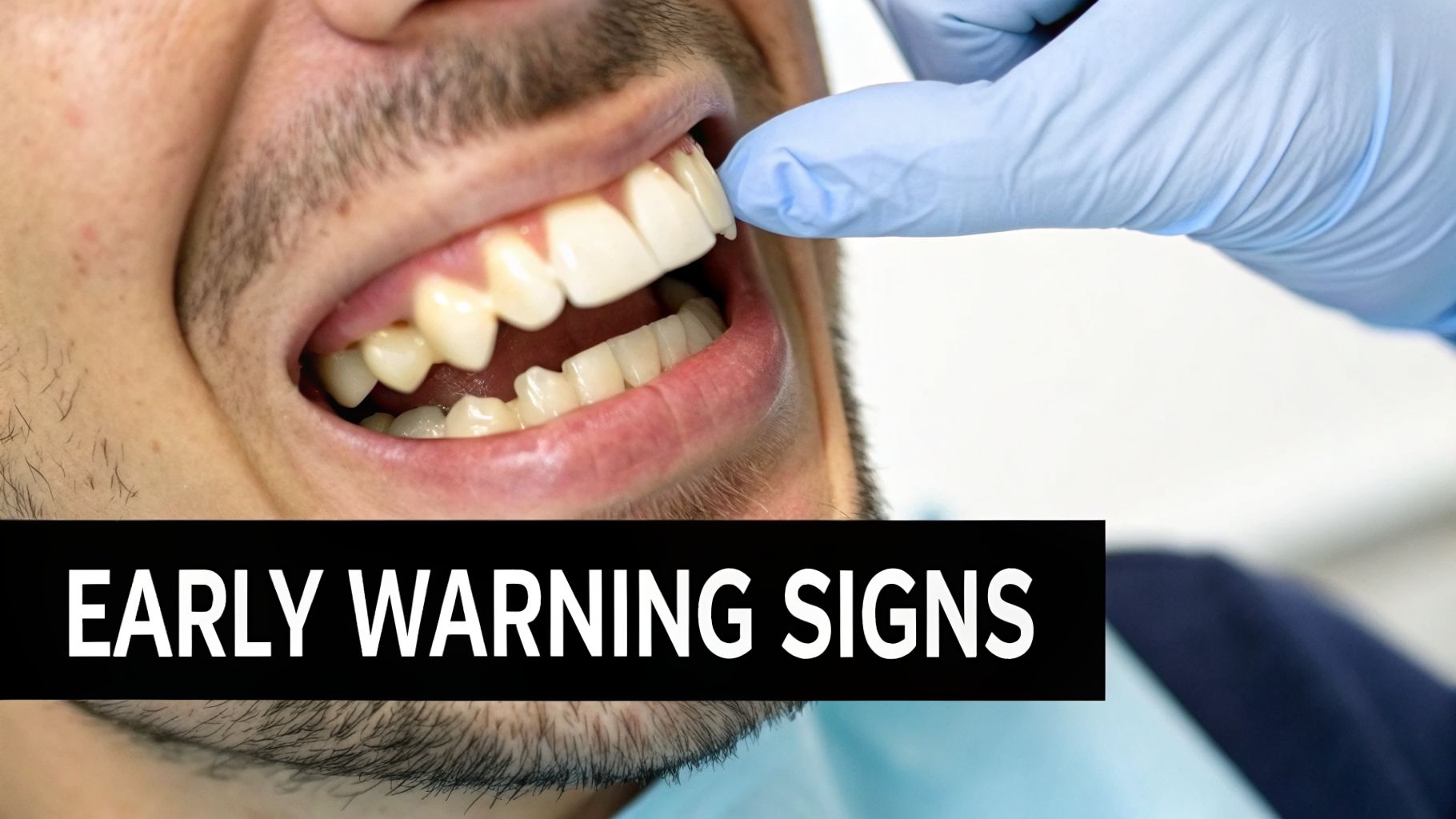
At Seven Oaks Dentistry & Sleep Medicine, we see ourselves as your lifelong health partner, dedicated to your well-being far beyond the day of your procedure. Catching a problem early often means the difference between a minor adjustment and a more involved treatment.
Common Signs to Watch For
Your body is excellent at signaling when something isn’t quite right. For a dental implant, these signs can be subtle at first, but being aware of them allows you to act quickly.
Pay close attention to these potential red flags:
- Persistent Pain or Discomfort: Some tenderness right after surgery is totally normal. Ongoing or new pain that shows up weeks or months later is not. This could be a dull ache, throbbing, or a sharp pain when you bite down.
- Swelling or Inflammation: Puffy, red, or tender gums around your implant can signal infection or irritation. Healthy gums around an implant should look firm and pale pink, just like they do around a natural tooth.
- Any Feeling of Movement: Your implant and its crown should feel 100% stable—just like a healthy, natural tooth. If you notice any wiggling, looseness, or shifting, no matter how slight, it needs to be checked immediately.
- Difficulty Chewing or Biting: If it suddenly becomes uncomfortable to chew on the side with your implant, this could point to an issue with the implant itself or how the crown is distributing pressure.
Your peace of mind is our priority. If you notice any of these signs, don't wait or wonder. An early check-up can prevent a small issue from becoming a significant problem, protecting your investment and your health.
What to Do If You Notice a Symptom
If you live in Wesley Chapel, FL, or the surrounding North Tampa area and experience any of these warning signs, the next step is simple: contact Seven Oaks Dentistry & Sleep Medicine right away.
Trying to self-diagnose often leads to unnecessary anxiety and can delay proper care. A quick, professional evaluation is always the best course of action. With 30+ years of experience, our dentist can accurately identify the cause of the symptom and map out the right solution.
Acting fast is your best defense against complications. This proactive approach reinforces our philosophy of complete health—caring for your smile is a collaborative effort, and we are here to support you every step of the way.
Your Questions About Dental Implant Failure Answered
Thinking about dental implants is a big step, and it’s only natural to have questions. We hear them all the time from our patients here in Wesley Chapel, and we believe feeling fully informed is the best way to feel confident in your decision.
The biggest takeaway we want you to have is this: with the right care and expertise, the dental implant failure rate is incredibly low. Success is the standard we aim for with every single patient, and our "complete health" philosophy at Seven Oaks Dentistry & Sleep Medicine is designed to ensure it.
Can a Failed Dental Implant Be Replaced?
Absolutely. In most situations, a failed dental implant can be successfully replaced. The first thing we do at Seven Oaks Dentistry is a deep dive into why the original implant failed. Was it an underlying infection? Was the bite force too strong for it to handle? Getting to the root cause is everything.
If an infection like peri-implantitis was the problem, our immediate focus is on clearing it out and making sure the site is completely healthy. This often involves a bone graft—a procedure to rebuild the jawbone, giving it the strength needed to support a new implant.
Once the area is stable and fully healed, our experienced dentist can place a new implant. The success rate for these replacements is usually very high because we’ve already solved the problem that caused the initial failure. It’s a perfect example of our "complete health" approach in action: we look at every contributing factor to give you the best shot at long-term success.
How Does My Overall Health Affect My Dental Implant Success Rate?
Your overall health and the success of your implant are deeply connected. This is a cornerstone of our comprehensive care philosophy at Seven Oaks Dentistry. We know the mouth is the gateway to the rest of the body, and you can't treat one without considering the other.
Certain health conditions and habits can make the healing process much tougher:
- Uncontrolled Diabetes: This can slow down your body's natural ability to heal and makes you more vulnerable to post-surgery infections.
- Smoking or Tobacco Use: This is one of the single biggest risk factors. Smoking constricts the blood vessels in your gums and bone, essentially starving the healing tissues of the oxygen they desperately need.
- Osteoporosis: Conditions that impact bone density can sometimes make it harder for the jawbone to fuse properly with the implant.
This is precisely why our process here in Wesley Chapel always starts with a comprehensive health review. By understanding your unique health profile, our experienced dentist can build a personalized treatment plan that gets ahead of these risks. Sometimes that means coordinating with your physician to get a condition under control before we begin, all to give your implant the best possible chance of lasting a lifetime.
At Seven Oaks Dentistry, we don't just see a missing tooth; we see a whole person. Your systemic health guides every decision we make, ensuring your dental care supports your overall well-being.
Is a Dental Implant Failure Painful?
Not always, and that’s why regular check-ups are so critical. While a sudden, acute infection (like an abscess) will definitely make itself known with pain, throbbing, and swelling, many implant issues start out surprisingly quiet.
For instance, slow and gradual bone loss around an implant—a classic sign of developing peri-implantitis—might be completely painless at first. You’re more likely to notice other, more subtle signs long before you feel any actual discomfort.
Keep an eye out for these painless red flags:
- The crown on your implant feels a little loose or wobbly.
- Your gums look puffy or reddish around the implant post.
- You see a little bit of blood when you brush that area.
- There’s a strange taste in your mouth or bad breath that just won’t go away.
At Seven Oaks Dentistry, we stress the importance of consistent follow-up visits after your implant is placed. These appointments let our dentist professionally monitor the implant, bone, and gum tissue, allowing us to spot potential trouble long before it becomes a painful or serious problem. If you feel anything out of the ordinary with your implant, even if it doesn’t hurt, it’s always best to call our Wesley Chapel office and get it checked out for your own peace of mind.
Why Choose a Private Practice for My Dental Implants?
In an era of corporate dental chains, choosing an independently owned dental practice like Seven Oaks Dentistry for your implants gives you real, tangible advantages that directly affect your care and the dental implant failure rate. The private practice model puts the focus right where it belongs: on you.
With over 30+ years of experience, our dentist offers a level of expertise—and just as importantly, continuity of care—that you can depend on. Here, you’re not a number on a chart; you’re a valued member of our community. We build long-term relationships that allow us to know your full health history and understand your personal goals.
Unlike big clinics that often struggle with high staff turnover, you’ll see the same dedicated, local dentist and team at our Wesley Chapel office visit after visit. This consistency is vital for complex treatments like dental implants, which require precise planning and ongoing monitoring for years. We are personally invested in your success and well-being, a commitment that defines everything we do for the North Tampa community.
Ready to take the next step toward a confident, healthy smile? At Seven Oaks Dentistry and Sleep Medicine, we're here to answer all your questions and create a personalized plan just for you. Schedule your consultation today and discover the difference that experienced, patient-focused care can make in Wesley Chapel, FL.
 Read Our Reviews

 October, 2026

